

Borosilicate Glass vs Soda Lime Glass: Key Differences
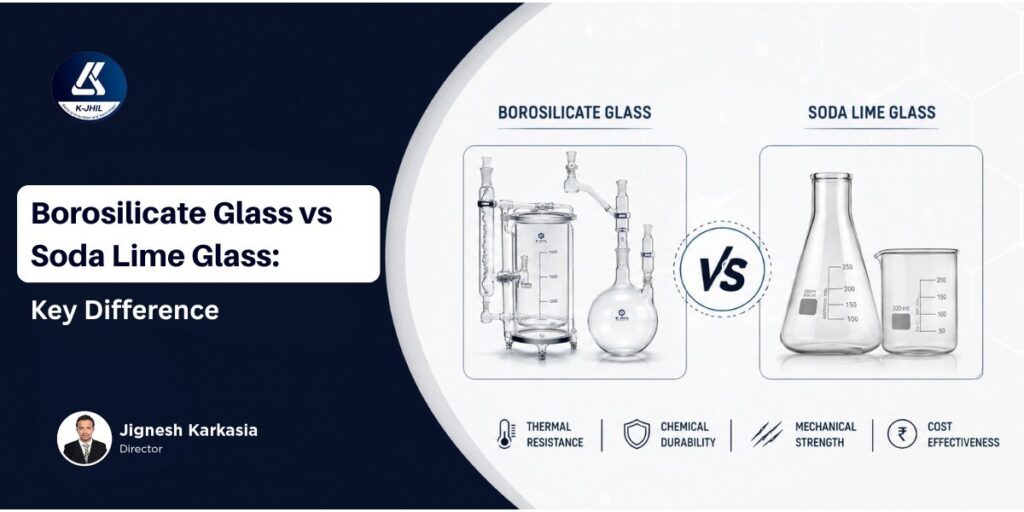
By the K-Jhil Scientific technical team, drawing on 30+ years in industrial borosilicate glass and chemical process equipment. QUICK ANSWER: Borosilicate glass contains boron trioxide, which pulls its thermal expansion down to 3.3 x 10⁻⁶ /K and lets it survive sudden temperature swings near 160C. Soda lime glass skips the boron, expands roughly three times […]
Borosilicate Glass vs Normal Glass: Strength, Heat Resistance, and Applications Compared
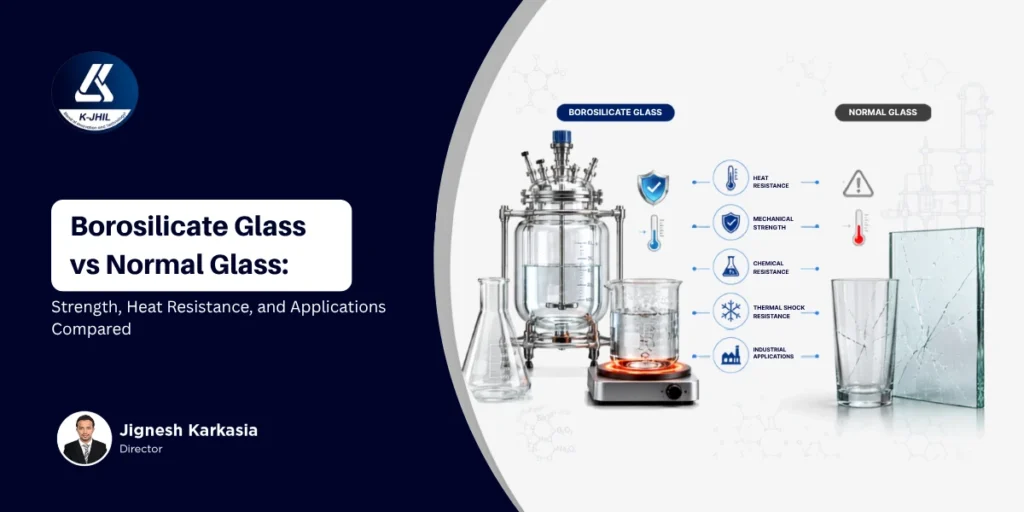
Strip the borosilicate glass vs normal glass debate right down and one number runs all of it: how far the glass grows when it gets hot. Borosilicate hardly stirs, maybe a third of what soda-lime does, and the reason is the 13% or so of boron trioxide baked in. Picture it on the bench. A […]
What Are the Different Types of Distillation Columns?
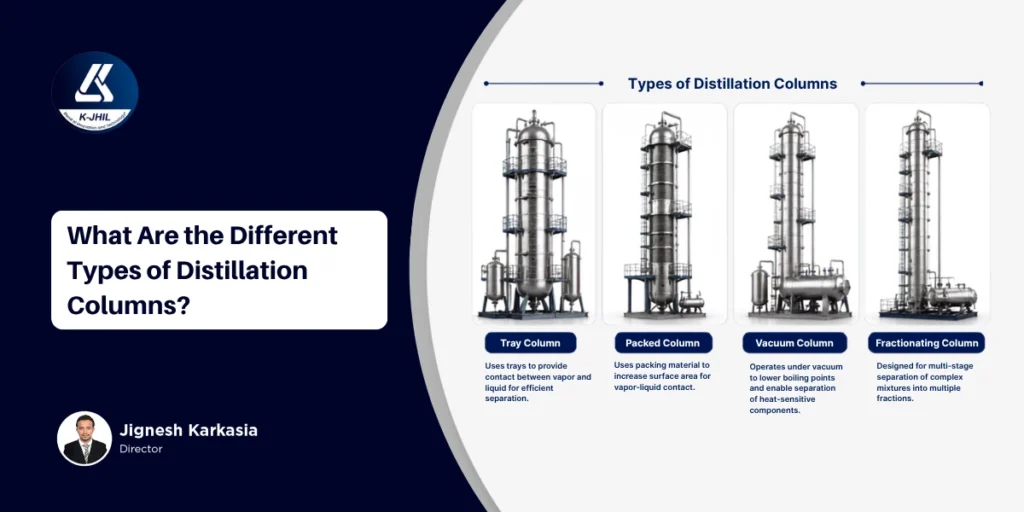
The cheapest column quote on your desk is almost never the cheapest column. I have watched that lesson cost plants lakhs, one weeping tray at a time. Choosing among the types of distillation columns is where the saving, or the bleeding, starts. Most buyers rush it. You do not really buy a column. You buy […]
How Bromine Recovery Plants Work: A Step-by-Step Guide
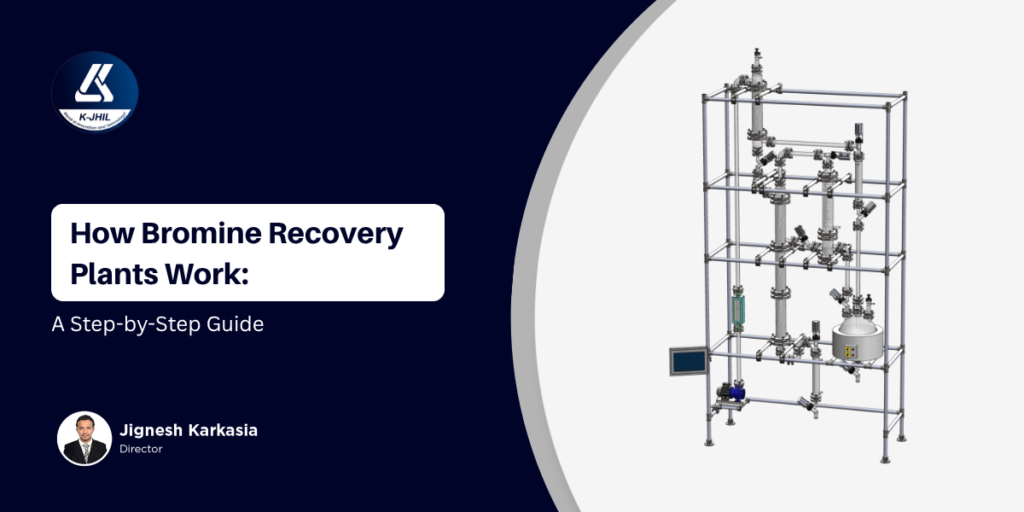
Funny story. My first day on a bromine site was somewhere outside Bhavnagar, back in July 1996. The senior engineer there told me half the salt farmers in Gujarat still thought recovery was Western nonsense. Three decades later, those same farmers can’t build these plants fast enough. And every client I sit with eventually asks […]
How to Choose the Right Fractional Distillation Column: Packed vs Tray
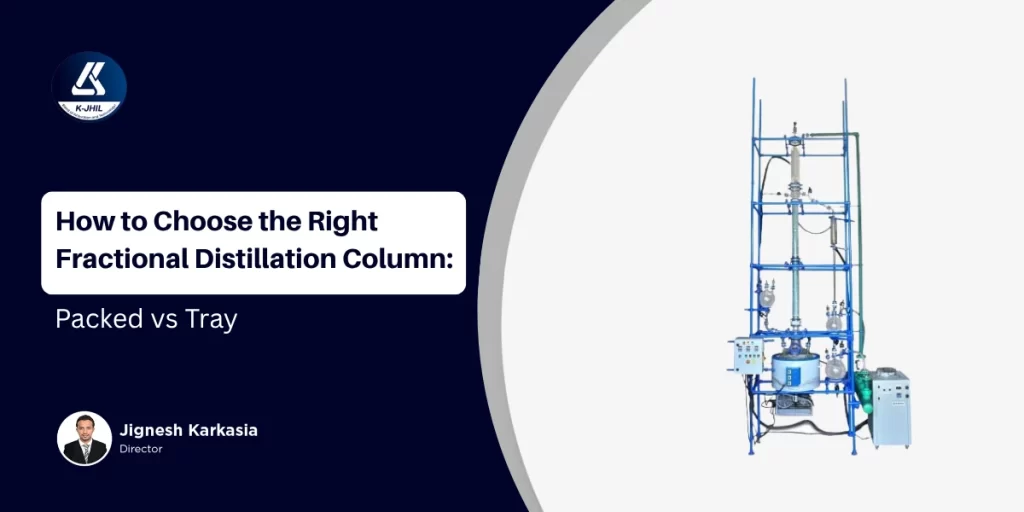
It was just past 4 a.m. when the night shift called me from a Vapi specialty plant. Their column was flooded. Pressure had blown past every alarm. By the time I picked up, the operators had already shut the reboiler and were watching liquid back up over the top trays. The column was six months […]
Benefits of Using Borosilicate Glass Reactors for High-Temperature Processes
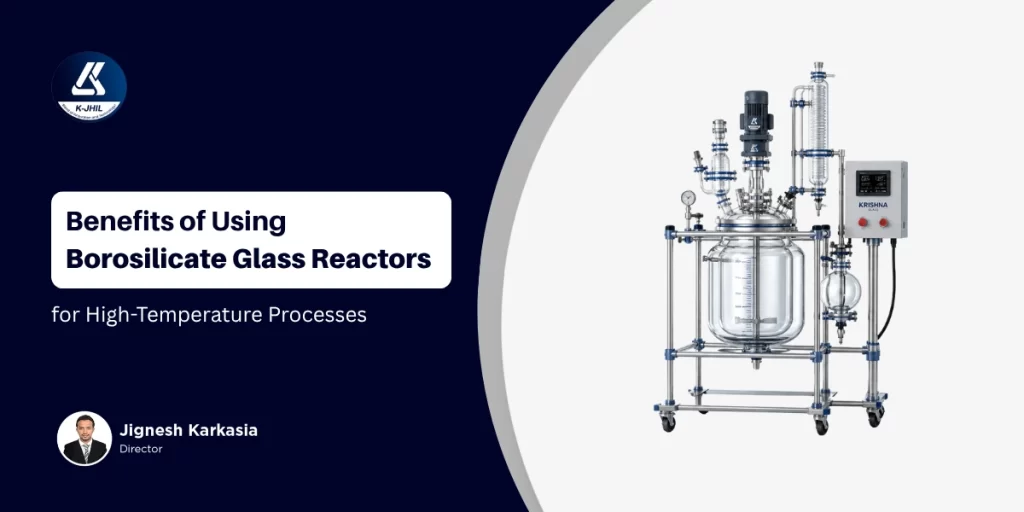
Are you currently working in chemical or pharmaceutical manufacturing? Then you must know just how tricky high-temperature reactions can become. For optimal performance, you need to handle both heat and corrosion of your equipment. Moreover, you also need to see what is happening inside in real time. That is exactly what using borosilicate glass reactors […]
What Are the Key Components of a Fractional Distillation Unit?
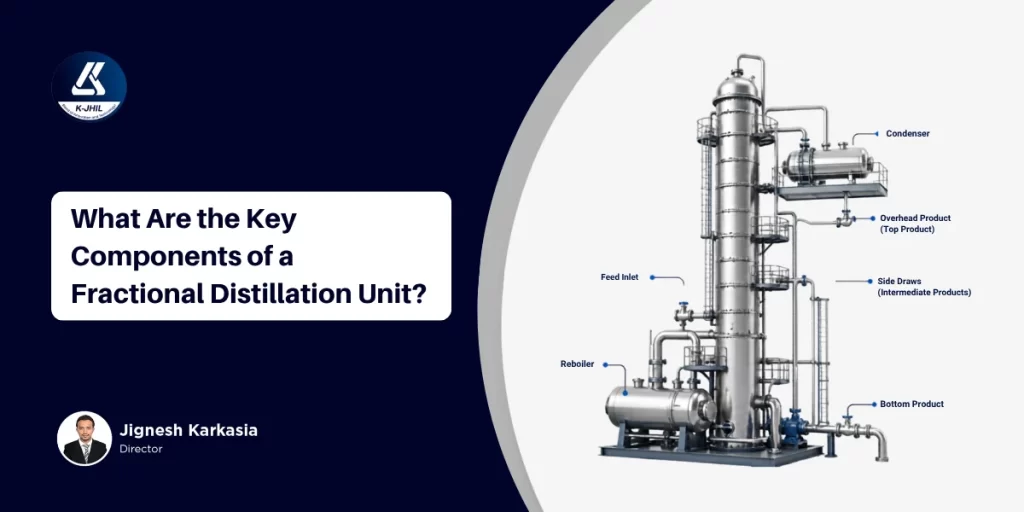
Fractional distillation is widely used in petroleum refining, chemical processing, and alcohol production, often involving multi-stage separation and multiple product streams. It is an extremely important separation process. This is particularly true for industrial needs. Even the fractional distillation unit is a complex piece of equipment in its own right. But once you understand each […]
Distillation vs Extraction: Choosing the Right Chemical Separation Technique
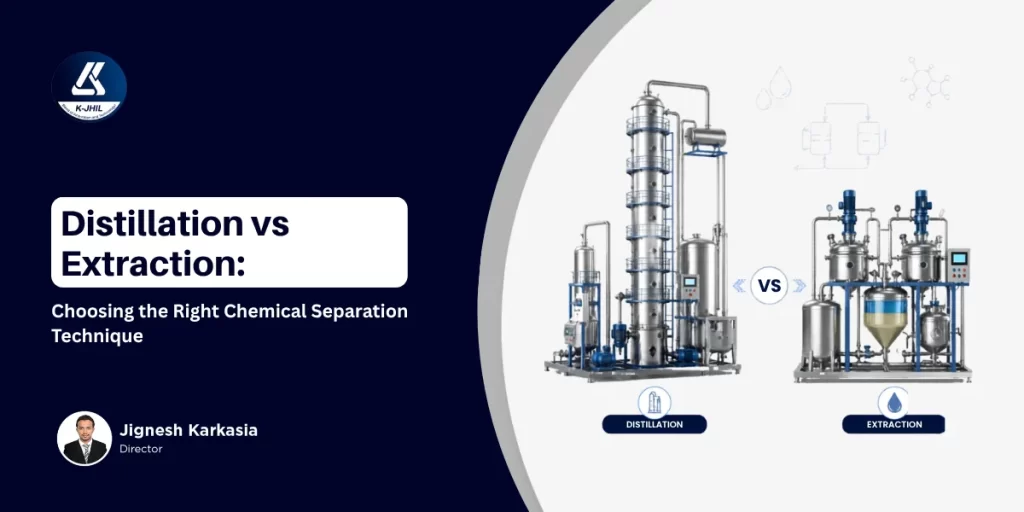
Have you ever tried to separate a mixture in chemical processing? How about doing it during pharmaceutical or food production? If you have tried to do it before, you already know how hard it can really be. Either the mixture fails to separate, or else the separation is not pure enough. Thankfully, we have two […]
What Is Borosilicate Glass: Types, Composition, and Properties
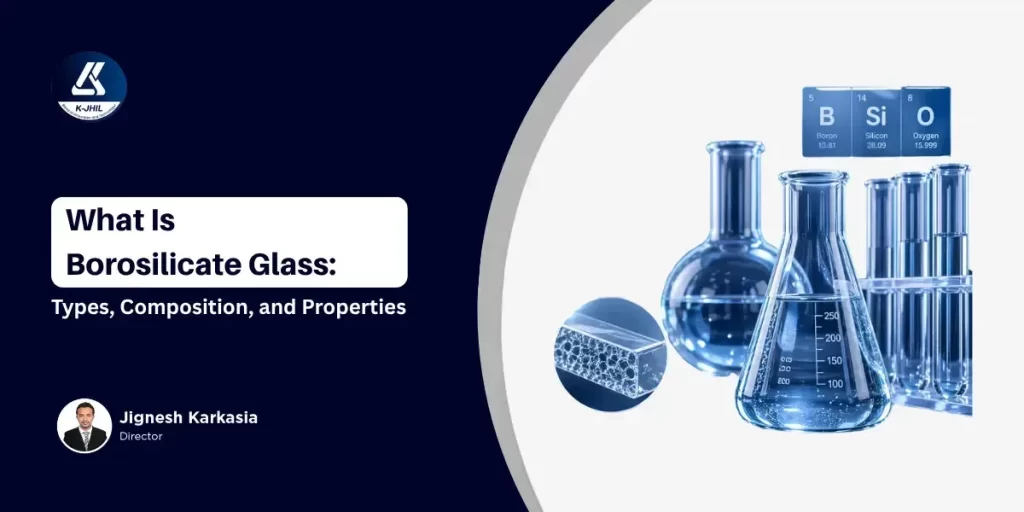
Have you ever thought about laboratory beakers? How could they withstand such extreme conditions? The answer is actually borosilicate. It is a type of glassware that has unique properties that make it stronger and more resilient. Such properties have made it popular not only in the laboratory but also in our homes. But what makes […]
The Role of Reactive Distillation in Reducing Process Steps and Costs
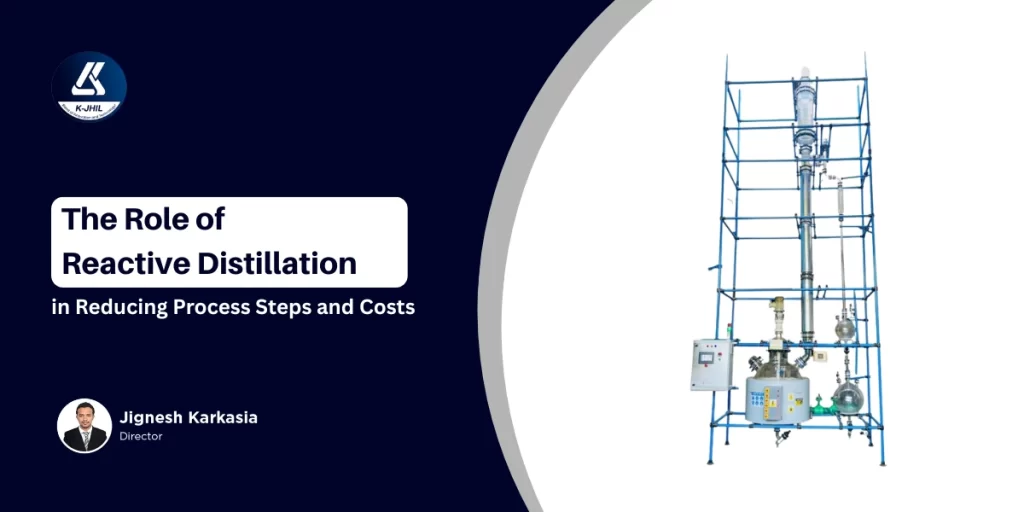
In most industrial chemical processes, two reactants combine to form a third product. This output is then usually purified before being used for the final product. But what if, instead of performing these two costly steps, you could achieve both in a single reaction? That is exactly what reactive distillation achieves. It combines chemical reactions […]