

Advanced Solid-Liquid Extraction System Manufacturer
Our solid-liquid extraction equipment delivers high yields, precise solvent control, and reliable
performance across pharmaceutical, food, and chemical applications.
Solid-Liquid
Extraction System
Our solid liquid extraction system is engineered for maximum efficiency across a wide range of applications, from pharmaceutical active compound recovery to botanical ingredient extraction. The process involves contacting the solid material with a carefully selected solvent under controlled temperature, pressure, and mixing conditions, ensuring thorough dissolution of target components. The resulting extract is then separated from the depleted solid residue, leaving a concentrated solution ready for further processing or purification. Available in batch and continuous configurations, our systems provide flexibility for laboratory research, pilot-scale development, and industrial production.
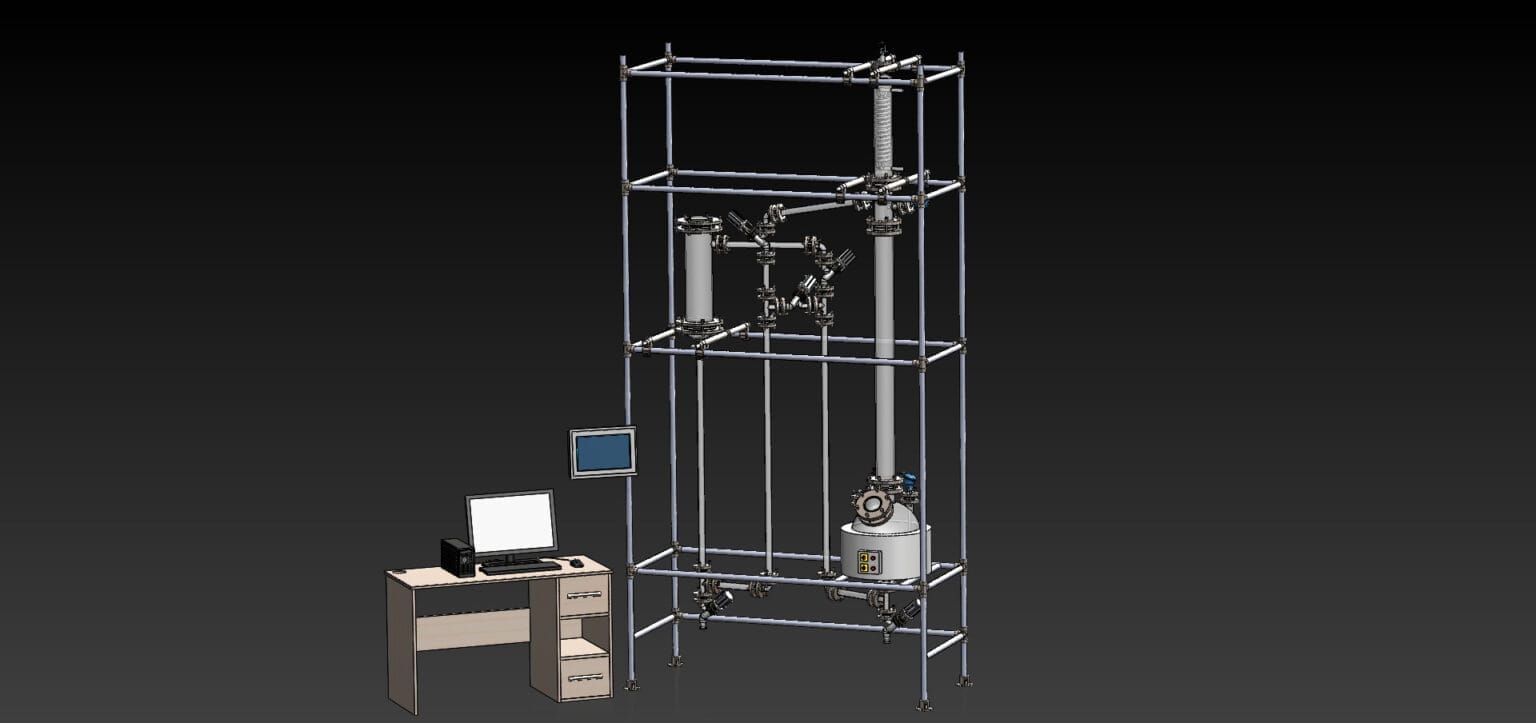
Key Features of Solid-Liquid Extraction Equipment
Our solid-liquid extraction unit is designed to maximize recovery efficiency, product
quality, and operational reliability. Each feature contributes to superior extraction outcomes across diverse industries.
Precise Temperature and Solvent Control
Suitable for Batch and Continuous Extraction
Corrosion-Resistant Industrial Construction
Efficient Extraction of Soluble Compounds from Solids
High Extraction Efficiency and Yield
Designed for Laboratory, Pilot, and Industrial Operations
Solid-Liquid Extraction System Configurations
Laboratory Solid Liquid Extraction Unit
- Configuration: Compact benchtop system with manual controls, glass components for visual monitoring, and small batch capacity.
- Suitable usage: Research and development, method development, and feasibility studies for new extraction processes.
Pilot Plant Solid Liquid Extraction System
- Configuration: Large-capacity system with full SCADA integration, continuous feed capability, automated solvent handling, and integrated recovery.
- Suitable usage: Commercial pharmaceutical manufacturing, large-scale botanical processing, and high-volume chemical extraction operations.
Industrial Solid Liquid Extraction Plant
- Configuration: Large-capacity system with full SCADA integration, continuous feed capability, automated solvent handling, and integrated recovery.
- Suitable usage: Commercial pharmaceutical manufacturing, large-scale botanical processing, and high-volume chemical extraction operations.
Applications of Solid-Liquid Extraction Systems
Pharmaceutical Extraction of Active Compounds
Recovery of alkaloids, flavonoids, and bioactive ingredients from medicinal plants and herbs.
Food and Beverage Ingredient Extraction
Isolation of flavors, colors, antioxidants, and functional ingredients from natural sources.
Botanical and Herbal Extraction Processes
Production of standardized herbal extracts for nutraceutical and cosmetic applications.
Chemical and Petrochemical Separation
Recovery of valuable chemicals from industrial residues and by-product streams.
Environmental Remediation and Soil Extraction
Removal of contaminants from soil matrices through selective solvent extraction.
Recovery of Valuable Compounds from Raw Materials
Processing of natural products, agricultural materials, and industrial solids to recover high-value components.
technology delivers consistent results across pharmaceutical, food, and chemical processing industries.
How the Solid-Liquid Extraction System Works
Solid material loaded into the extraction vessel
Prepared solid matrix (ground, dried, or pre-treated) is charged into the extraction chamber.
Solvent introduced to dissolve target components
Preheated solvent is added to contact the solid material, initiating dissolution of soluble compounds.
Mixing or circulation enhances extraction efficiency
Agitation, recirculation, or percolation maximizes contact between solvent and solid surfaces for complete mass transfer.
Extract solution separated from solid residue
Solvent containing dissolved solute is drained or decanted, leaving depleted solid behind.
Solvent extract collected for further purification
The enriched extract is collected for downstream processing, including concentration, purification, and solvent recovery.
Why Choose Us
extraction equipment backed by superior manufacturing standards. We provide customized
extraction solutions, process automation expertise, and comprehensive engineering
support for reliable industrial performance.

K-Jhil Promise in Quality

Innovative Approach

Automation Expertise

Trouble-Free Processes

Tailored Process Solutions

Customer-Centric Approach
K-Jhil Promise in Quality
Innovative Approach
Automation Expertise
Automation Expertise
Tailored Process Solutions
Customer-Centric Approach
Solid-Liquid Extraction System FAQs
What is solid-liquid extraction?
How does a solid-liquid extraction system work?
What industries use solid-liquid extraction equipment?
Key industries include pharmaceutical manufacturing (active ingredient extraction), food and beverage (flavor and color isolation), nutraceuticals (herbal extracts), cosmetics (botanical ingredients), chemical processing, and environmental remediation.