
Let’s talk about that old box of tech you keep in your closet. The one that you treat like your personal graveyard for ancient phones and laptops.
You may know it as garbage or e-waste. But what if I told you that, using some professional assistance, you can extract gold from it?
Gold extraction from e-waste might sound like magic, but it isn’t. Actually, the entire process is completely scientific and relatively common.
Curious about how it works? Mainly, it has to do with gold’s excellent electrical conductivity. This is why it is used in most processors and circuits in our devices, making the extraction of gold from e-waste possible.
To see how refining equipment supports the final purification stage, this guide on the science behind gold refinery machines explains the system in more detail.
Let’s go step-by-step and understand how gold extraction from electronic waste is actually done!
Step 1: Breaking down the e-waste
Before we can extract gold from your old electronics, we need to take them apart.
To take gadgets apart on an industrial scale, workers or machines usually work around the clock to remove useless parts from the actual electronics. Other parts, like screens and plastic shells, have no gold and are thus discarded.
What remains are motherboards, memory chips, and processors. These are the components that usually contain gold. Using big industrial shredders, these parts are then ground into fine powder to prepare them for the next step.
Step 2: Sorting out the gold from the metals
This fine powder contains mixed bits of plastic, copper, and tiny specks of gold. To get what we need, we first need to sort out the bad stuff.
Usually, this involves using some powerful chemicals. But before using chemicals, workers try to separate these impurities using physical methods.
These methods include using powerful magnets to remove any iron or steel from the mixed powder. Alongside magnets, other advanced machines are used to separate lighter materials from heavier ones in the mix using air or vibration.
Basically, the goal here is to make the powder as concentrated with gold as possible. This allows the next step of the gold extraction process from e-waste to be more efficient and cost-effective.
Step 3: Separating gold using Chemicals
This is the primary step in the entire process of extracting gold from electronic waste. It involves removing the gold from the solid powder by turning it into a pure liquid.
I. The Aqua Regia Method
Strong acids are the most common way to separate gold from the solid mixture. Since they are extremely dangerous, I recommend partnering with a leading gold refinery manufacturer to support your gold extraction process.
Using a super-strong acid mixture known as aqua regia (Latin for “royal water”), workers dissolve the mixture. This is done until only solid chunks of gold remain floating in the mixture.
The process involves:
- Soaking the fine powder in a strong acid mixture of hydrochloric and nitric acid
- Dissolving the metals in this acid until gold is left floating in the acid mixture.
- Filtering out the leftover impurities from the solid metal block that settles beneath the mixture.
Safety Note: This step involves working with highly corrosive and dangerous chemicals. Please do not try this on your own, as this can lead to severe injuries. |
II. The Cyanid Method
Another method of extracting gold using chemicals involves a diluted cyanide solution. It is a fairly modern method used by many large operations.
While cyanide is less corrosive than aqua regia, it poses a different danger. Cyanide is highly poisonous.
So how is it done safely? It involves cyanide binding to the gold trapped in the mixture, then pulling it out into water. But since cyanide is highly toxic, this method is complex and requires a lot of safety precautions.
Step 4: Purifying the Gold and Turning It Back to a Solid
Now that we have gold in its liquid form, how do we turn it back into a solid? The trick used for this process is called precipitation.
Using another chemical, such as sodium metabisulfite, the gold solution is hardened and returned to its solid state. It works by joining gold with other metals into a mud that collects at the bottom of the mixture.
But this mud isn’t pure, as it contains other metals mixed with the gold we are after. Therefore, to get pure gold out of the mixture, it needs further refining.
This means melting the mud into a specialised high-temperature furnace until gold is separated from its other metal impurities.
Step 5: Final Touch of Purification
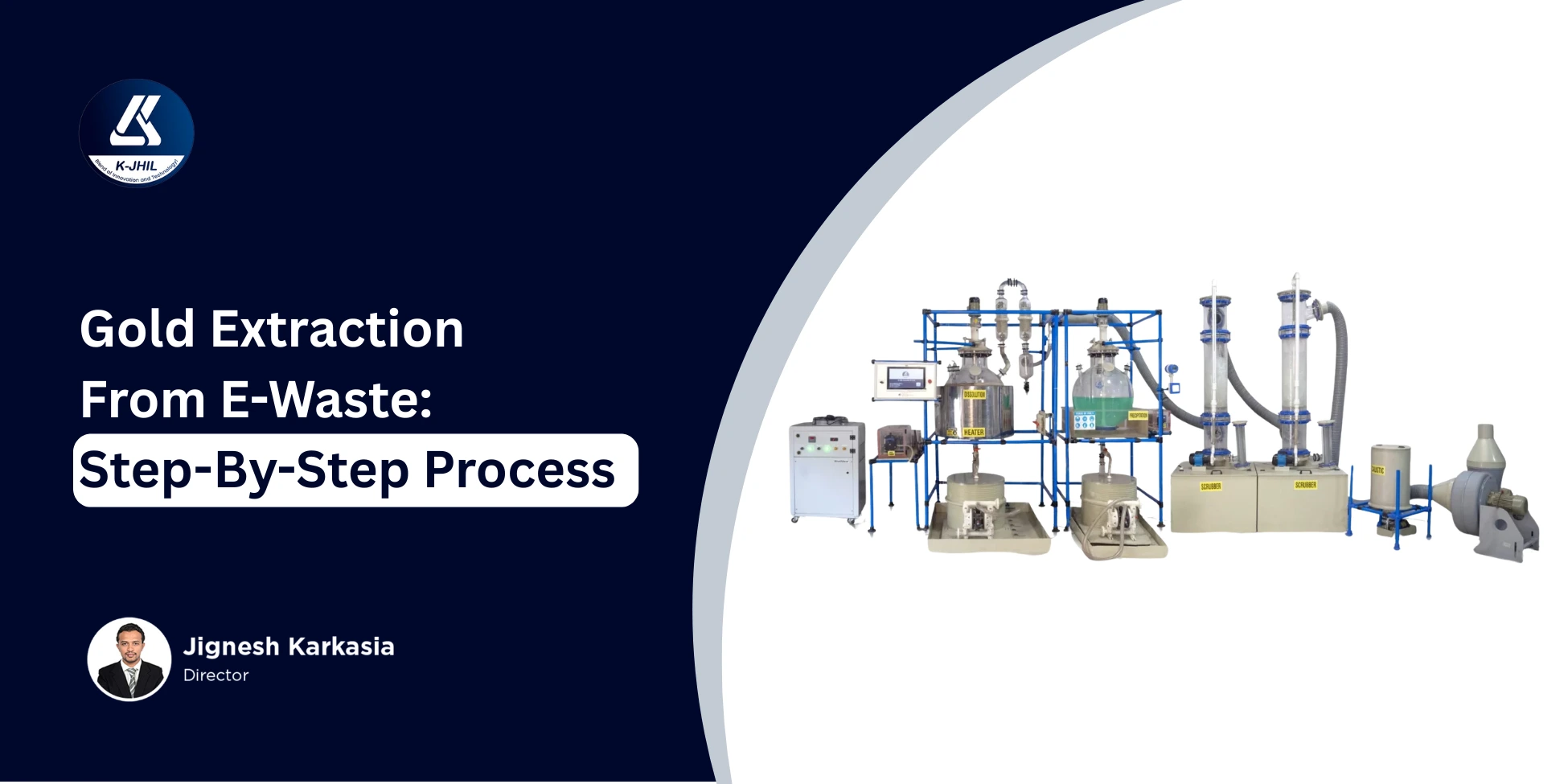
The final step in the process of gold extraction from e-waste involves a specialised gold refinery machine. Usually, this is an electrolytic system that runs an electric current across the molten gold.
This pulls the pure gold to one side of the electrolysis chamber, leaving the impurities behind.
Finally! We have a bar of pure gold that is ready to be reused as a precious metal.
Many recovery workflows rely on the liquid liquid extraction process to separate valuable metal-bearing compounds from complex solution streams.
Why You Should Leave Gold Extraction From E-Waste To The Pros
You might be wondering right now, “Why can’t I just do this gold extraction from the e-waste process on my own?” I would strongly advise against even trying it.
Here is your reality check on why you should never try this process at home:
- It’s Incredibly Dangerous: The elements used in the gold recovery chemicals list are no joke. They can lead to severe burns and even large explosions.
- The Waste Left Behind is a Nightmare: The impurities you take away during the process form a toxic acidic sludge. It is highly poisonous, and disposing of it safely can be incredibly expensive and dangerous.
- The Math Only Works on a Large Scale: The amount of gold you will actually get from your e-waste is very tiny. A ton of old phones can yield you just a few grams of gold. With your additional investment in safety gear and equipment, gold extraction from smaller batches can actually end up costing you money.
Once you understand the recovery route, the next step is comparing gold refining machine price in India based on your expected capacity and automation needs.
Conclusion
When it comes to gold extraction from e-waste, it is best to leave it in the hands of skilled professionals.
Experts like K-Jhil have spent more than 3 decades providing solutions for extracting and refining precious metals like gold. They are one of the most reliable players in this industry and serve large corporations globally.
K-Jhil also excels in automated solutions, making the entire gold refining process truly effortless and secure.
As we have seen in this blog, chemical extractions are dangerous and require sustainable solutions to become truly effective. K-Jhil has built its legacy around solving this issue with its precious metal refineries.
Excited to learn more? Contact the experts at K-Jhil today and get answers to your further queries!
FAQs
1. Is there really gold in my old electronics?
Yes, absolutely! Electronics like phones, laptops, and circuit boards use tiny amounts of gold because it’s an excellent conductor that doesn’t corrode. While the amount in one device is very small (often less than half a gram in a phone), it adds up quickly when processed in large volumes.
2. Can I extract gold from my old gadgets at home?
I strongly advise against it. The process involves dangerous, corrosive acids and produces toxic fumes and hazardous waste. The cost, safety risks, and environmental harm far outweigh the tiny amount of gold you’d recover. It’s a job for professional, certified facilities with the right equipment and safety protocols.
3. What do professionals use to dissolve the gold?
The most common method uses a powerful acid mixture called aqua regia (a blend of hydrochloric and nitric acid). Some large-scale operations may use cyanide leaching, which is also extremely hazardous. Both methods are strictly for controlled industrial settings with proper safety measures.
4. What’s the most important step I can take?
The best thing you can do is to collect your e-waste and send it to a certified recycler. This ensures the valuable materials are recovered safely and responsibly, toxic components are handled properly, and you support a circular economy. Don’t let it sit in a drawer or throw it in the trash.
5. Is this process good for the environment?
When done correctly by professional recyclers, yes. It reduces the need for destructive, new mining and keeps toxic materials like lead and mercury out of landfills. The key is responsible recycling—amateur attempts can cause serious pollution, but the industrial process is designed to minimize environmental impact.