
Table of Contents
Phone rang at 6 AM, spring of last year. Client in Ankleshwar. His distillation column had cracked overnight, mid-run, and he was sure we’d shipped him the wrong borosilicate.
We hadn’t. Right grade, wrong duty. Happens more than you’d guess.
Anyway, that call is why I’m writing this guide. After thirty years building process glass for chemical and pharma plants, I’ve watched the same confusion play out hundreds of times. People hear “borosilicate” and assume it’s one thing. Nope. It’s a whole family of materials, and grabbing the wrong cousin for your reactor will cost you. Money. Time. Reputation, sometimes.
Key Takeaways
Borosilicate isn’t one material, it’s a family. Three grades dominate industrial work: 3.3, the 4.9 to 5.1 range, and 7.0. The numbers refer to thermal expansion, what we call CTE.
Grade 3.3 carries the industrial load. Reactors. Columns. Heat exchangers in plants worldwide. Thermal expansion roughly a third of regular soda lime.
USP Type I, II, and III is a totally separate system that tracks hydrolytic resistance, not heat tolerance. Every borosilicate grade falls in Type I.
Thermal shock tolerance? About 166°C (or 330°F) for grade 3.3. Soda lime cracks at around 40°C.
Chemical resistance is pretty close to perfect. Acids, water, halogens, organic solvents. The two killers are hydrofluoric acid and hot caustic.
What Borosilicate Glass Actually Is
Strip it back, and borosilicate is silica fused with boron trioxide. Roughly 80% SiO₂, 12 to 13% B₂O₃, a bit of sodium oxide (around 4%), and 2 to 3% aluminum oxide thrown in.
Boron does the work. Tightens up the molecular network so the glass barely expands when heated. That single property cascades into nearly everything else useful about the material.
Otto Schott figured this out in Jena, Germany, way back in 1893. German chemists were on a tear that decade. The basic recipe hasn’t shifted much since, because honestly, it didn’t need to. What’s improved is the precision of modern manufacturing and how big we can build industrial systems from the stuff.
Types of Borosilicate Glass by Grade
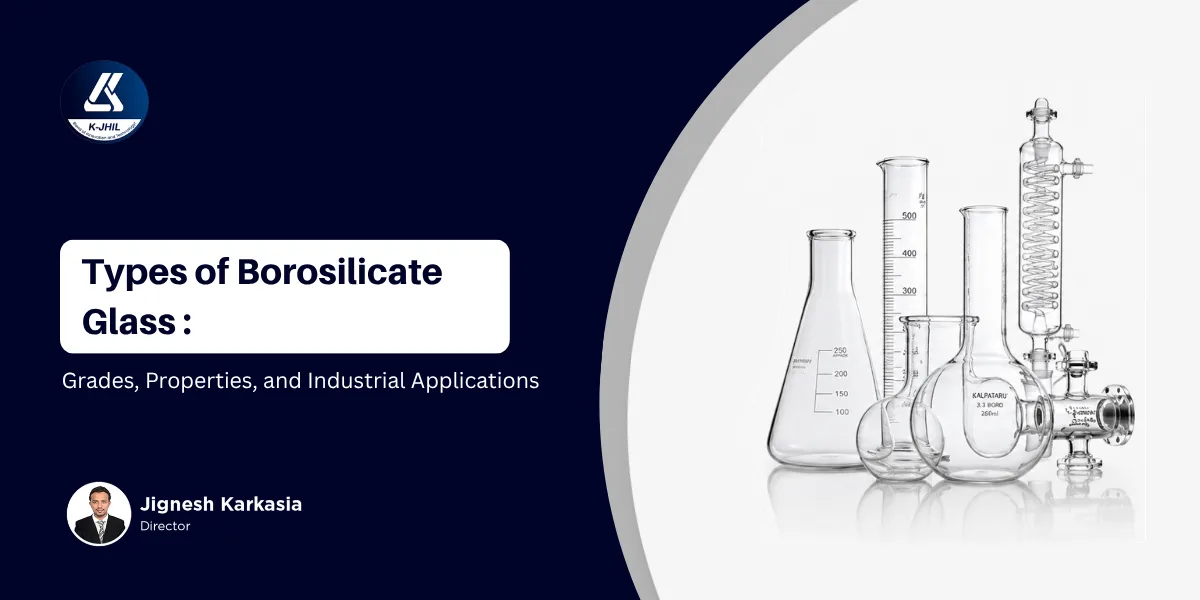
ISO 3585 specifically defines the properties and composition requirements for borosilicate glass 3.3. The lower the number, the better the thermal shock resistance. Here are the grades I actually work with.
Borosilicate 3.3 (The Workhorse)
This is what I spec for almost every chemical plant project I touch. You’ll meet it branded as Schott Duran, Simax, Kavalier, Boronorm, Pyrex (the lab version), Suprax 8488, and Borosil here in India. Carries ISO 3585, DIN 12217, and ASTM E-438 Type 1 Class A certification.
Working range? While borosilicate 3.3 retains stability at elevated temperatures, most industrial systems operate below 300°C for long-term reliability. Cryogenic service down to -196°C, which is colder than liquid nitrogen, by the way.
Many corrosive acids that aggressively attack stainless steel have minimal effect on borosilicate 3.3 under properly controlled conditions. Years later. If you’ve ever stood next to a tall transparent column in a pharma plant, you’ve stood next to 3.3.
Borosilicate 4.9 / 5.1 (Pharmaceutical Tubing Glass)
Sometimes called neutral glass. It’s alkaline-earth borosilicate, with slightly higher CTE because the chemistry trades a bit of thermal shock margin for far easier tube production. And tube production matters a lot when you’re churning out billions of vials and ampoules every year, like the pharma packaging industry does.
This grade shows up as SCHOTT FIOLAX, BORO-8330, Corning 51-V (clear), and 51-L (amber). Still USP Type I for parenteral packaging, despite the bigger CTE. Me, I don’t spec 4.9 or 5.1 for reactor systems. The shock margin gets too tight for the kind of chemistry I run. For drug containers though? Nothing else makes sense.
Borosilicate 7.0 and High Borate Variants
These push boron content higher, for very specific optical and chemical needs. Suprax 8488 is the classic example in technical lighting. Amber actinic glass for UV-sensitive pharmaceuticals comes from this family too. CTE jumps to around 7.0, which more or less closes the door on aggressive thermal shock duty.
96% Silica Glass (Vycor Family)
When boron drops out and silica climbs past 96%, the glass starts behaving like fused quartz. Wild thermal shocks. Temperatures past 900°C. No problem at all. The catch is cost, which is exactly why Vycor only shows up when nothing else holds.
USP Pharmaceutical Glass Types: I, II, and III
Buyers and engineers get crossed up on this one all the time. Grade numbers (3.3, 4.9, 5.1) and USP Type numbers (I, II, III) are two completely separate classification systems. USP tracks hydrolytic resistance. Says nothing about thermal expansion.
Type I: Borosilicate. Highest hydrolytic resistance grade. Required for injectables, biologics, sensitive parenteral drugs.
Type II: Soda lime with a sulfur treatment on the inner surface. Better water resistance than plain soda lime. Used for some non-parenteral products.
Type III: Plain untreated soda lime. Good only for dry solids and non-aqueous formulations. Period.
Every borosilicate grade qualifies as Type I. So if your purchase order just says “Type I glass” without specifying the CTE too, that’s a red flag. Ask the vendor for both numbers. They describe different things. And any supplier who can’t quote both probably can’t manufacture the product reliably anyway.
Borosilicate Glass Properties That Actually Matter
Spec sheets run for pages. Don’t believe me, look up a Schott Duran datasheet sometime. After three decades on the plant floor, I’ll tell you which four properties actually decide whether your equipment survives.
Thermal Expansion and Shock Resistance
The thermal expansion of borosilicate glass is about a third that of regular window glass. That number alone explains why borosilicate doesn’t crack when boiling solvent meets a cold reactor wall. A typical 3.3 vessel handles a temperature differential around 166°C (330°F) without complaining.
For comparison? Soda lime fractures at maybe 40°C ΔT. Quartz takes nearly 1000°C. Real-world shock tolerance also depends on wall thickness, annealing quality, and ramp speed. So treat the data sheet number as a starting point. Not a guarantee.
Chemical Resistance and Durability
Borosilicate glass durability against acids? No exaggeration here, it’s legendary.Borosilicate glass shows excellent resistance to many mineral acids, with only gradual surface attack under certain high-temperature or highly concentrated conditions. even after years of service. Borosilicate 3.3 meets HGB 1 hydrolytic class under ISO 719, which is the top water resistance grade in the spec.
Two real enemies. Hydrofluoric acid etches every silica-based glass at any concentration. Strong alkalis above about 60°C slowly etch the surface too. Comparative studies put soda lime’s disintegration rate at roughly ten times that of borosilicate, in both mildly acidic and moderately alkaline conditions.
Mechanical Strength and Optical Clarity
Compressive strength sits around 1000 MPa. Tensile strength much lower, as with every glass. Which is why every system we build relies on flanged joints, PTFE gaskets, support cradles, spring-loaded bolts. To keep tensile loads in check. Mishandle the glass, and it breaks. Mount it right, and the same piece runs for decades.
Optical clarity gets seriously underrated as a process feature. Watching a reaction live. Seeing crystals form. Catching foaming before it floods your column. That’s a safety system, not a luxury. No metal vessel gives you that kind of feedback. It’s one reason I keep specifying glass over Hastelloy when the chemistry lets me.
Borosilicate Glass vs Soda Lime Glass
Soda lime is cheaper. People ask if it’ll do the job. Honest answer: almost never, not for anything involving heat or chemicals.
Soda lime expands roughly three times more under heat. Dissolves slowly in alkaline solutions. Clouds up under acid exposure after a few years. Fine for windows. Fine for bottles, dishes, decorative jars, most household uses really. The moment a real chemical or thermal cycle hits the vessel though, you’re asking for trouble.
Borosilicate Glass vs Quartz Glass
Quartz is the upgrade path. Its CTE sits at about 0.5 x 10⁻⁶/K, roughly seven times lower than borosilicate 3.3. Handles continuous service above 1000°C with no problem.
But quartz comes with fabrication headaches. Shaping it into large, complex assemblies is genuinely hard work. The price punishes you when you overspec. For most chemical processes running below 300°C, borosilicate 3.3 is the smart spend, by a wide margin. I save quartz for deep-UV optics, semiconductor work, and a handful of specialty distillations where there’s no alternative.
Industrial Applications Where Borosilicate Glass Earns Its Keep
Thirty years, and I’ve watched these applications grow up firsthand. This is where I get most opinionated, probably.
Chemical and Pharmaceutical Reactors
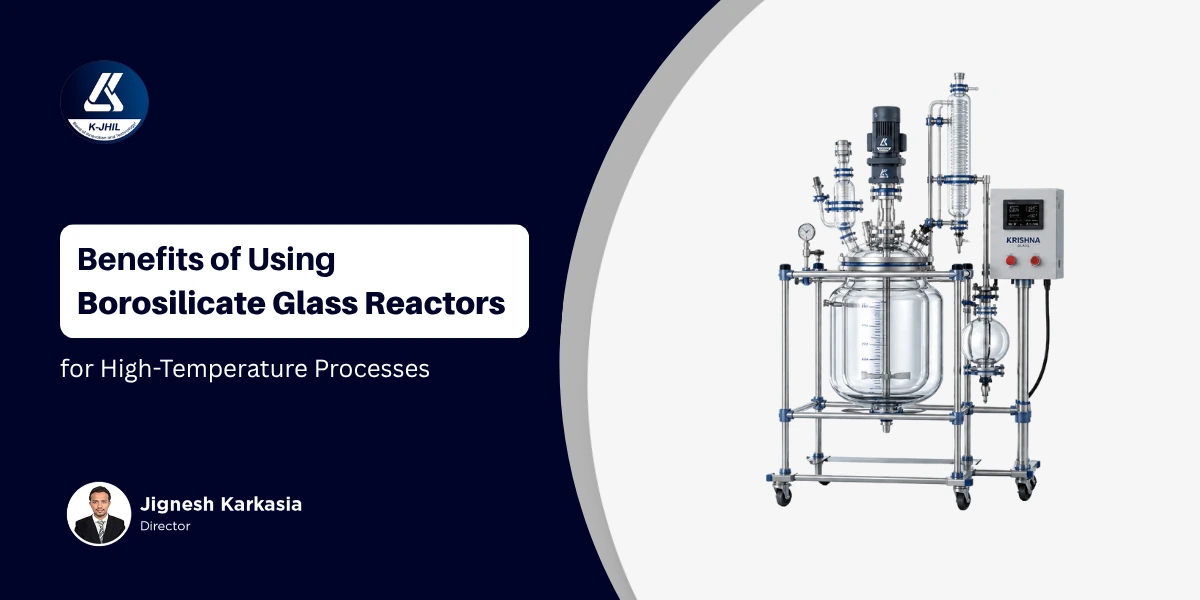
A modern borosilicate glass reactor sits at the heart of countless API and intermediate production lines. Transparency lets operators see every stage of a reaction. The chemical resistance lets one vessel cycle through dozens of different chemistries over its lifetime without cross-contamination worries.
A jacketed chemical glass reactor extends this with active temperature control through the outer jacket. I’ve watched the same unit handle cryogenic Grignard chemistry one week, then high-temp condensations the next. Zero issues, both runs.
Bromine Recovery and Halogen Handling
Bromine is brutal stuff. Almost nothing metallic survives long-term contact with it. Which is why every serious Bromine Recovery Plant I’ve designed uses borosilicate 3.3 for the columns, condensers, and absorbers. The glass just shrugs bromine off, year after year. We had one client running their setup for more than a decade before they did any glass replacement work.
Distillation, Absorption, and Heat Exchangers
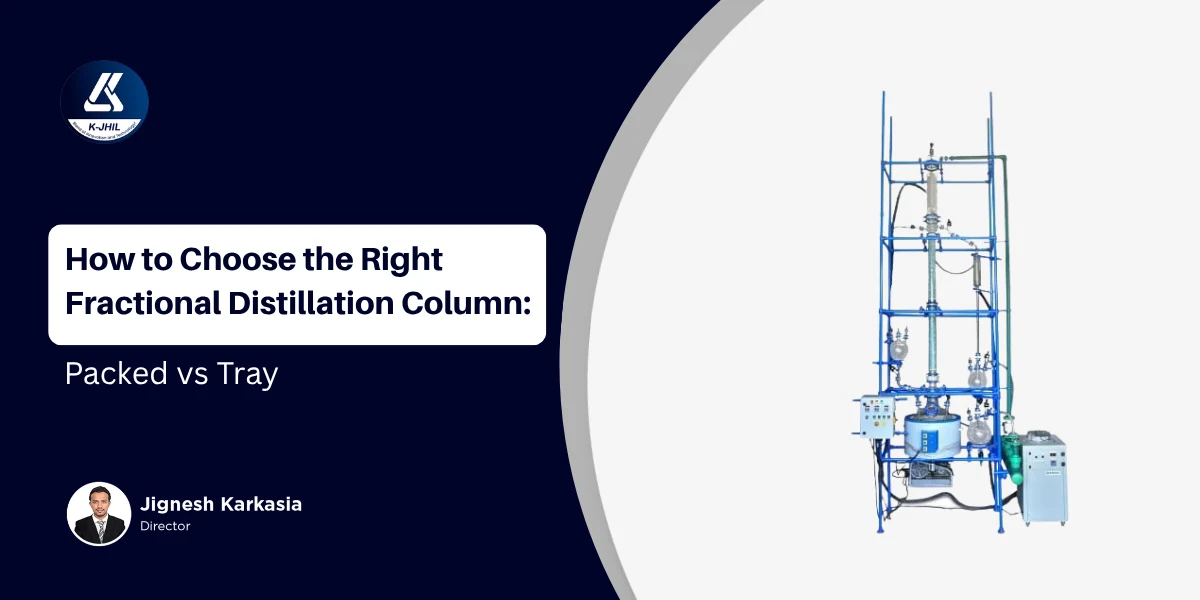
Tall borosilicate columns, sometimes ten meters or more, run continuous distillation across solvent recovery, fine chemicals, and chlor-alkali plants. Shell-and-tube heat exchangers in borosilicate take HCl absorption duty where stainless steel would pit out within weeks. The visual access alone justifies the choice. Operators spot flooding or fouling before any sensor catches it.
Pharmaceutical Primary Packaging and Cryogenic Service
Grades 4.9 and 5.1 own this space completely. Every injectable vial, ampoule, and cartridge in a hospital started life as borosilicate Type I, formed into thin-walled tubes during manufacture. The same family also handles cryogenic duty down to -196°C. Which is why liquid nitrogen storage and ultra-low-temp lab freezers depend on it.
Optical, Sealing, and Specialty Applications
Borosilicate’s CTE can be tuned to match metals like molybdenum, tungsten, and Kovar. Makes it crucial for electrical feedthroughs, vacuum tubes, and electronic device housings. Borofloat, Schott’s float-process borosilicate, dominates optical inspection windows, semiconductor substrates, and high-end display glass.
Common Mistakes I See in Glass Specification
Three decades of consulting, and the same handful of errors keep coming up.
Mixing up grade numbers with USP Types: Type I refers to hydrolytic class. Not thermal expansion. Always demand both numbers on the certificate. I’m serious about this one.
Assuming all Pyrex is borosilicate: Lab PYREX (capital letters) still is. But consumer pyrex (lowercase) sold in American grocery aisles since the late 1990s is tempered soda lime. They behave nothing alike under thermal shock. Total trap for first-time buyers.
Specifying borosilicate for HF service: HF eats every silica-based glass at every concentration. Don’t try it. PTFE-lined or fluoropolymer equipment is the answer.
Underestimating mechanical fragility: Even well-annealed 3.3 needs proper mounting, gasketing, and trained operators. The data sheet tells you half the story. The other half plays out on the floor.
Skipping the certificate of conformity: If a supplier can’t show you an ISO 3585 or DIN 12217 cert, walk away from the deal.
How to Choose the Right Type for Your Process
Here’s the framework I share with junior engineers on my team. Start with the chemistry. If HF or hot strong alkalis are involved, glass isn’t the right answer at all. We’d spec lined steel, or a corrosion-resistant alloy instead.
For acidic, oxidizing, or solvent-based chemistry? Borosilicate 3.3 is your default pick. Move up to 4.9 or 5.1 only when you’re producing primary pharmaceutical packaging. Climb all the way to quartz only when temperatures cross 500°C, or you specifically need deep-UV transparency.
Grade matters. But fabrication and annealing matter just as much, sometimes more. A badly annealed piece of 3.3 will fail before a properly-made piece of 5.1. At K-Jhil Scientific, we anneal every component twice. Pressure test every assembled system. Because the spec sheet is half the job. The other half is craftsmanship.
Get the grade right, and your glass equipment will outlast the plant around it. That’s not marketing copy. It’s the lesson three decades of cracked columns and silent reactors have taught me, one phone call at a time.

Frequently Asked Questions
1. Is borosilicate glass the same as Pyrex?
Yes and no. PYREX in capital letters (the laboratory brand) is still borosilicate 3.3. The lowercase ‘pyrex’ in American kitchen aisles since the late 1990s? Tempered soda lime. Totally different glass under the same name. European Pyrex stayed borosilicate the whole time. So flip the dish over and check the label before you assume anything.
2. What’s the maximum temperature borosilicate glass handles?
Continuous service is rated around 500°C for borosilicate 3.3. Short excursions to the strain point near 510°C are tolerable. The softening point sits at 820°C, but mechanical integrity is long gone before you get anywhere near that number.
3. Which acids damage borosilicate glass?
Two real enemies. Hydrofluoric acid at any concentration is instantly aggressive. Hot phosphoric acid and strong alkalis like NaOH and KOH above 60°C will etch the surface over time. Everything else, including hot sulfuric, hydrochloric, and nitric, is basically inert against it.
4. Is borosilicate glass safe for food and drinks?
Yes. Chemically inert, lead-free, BPA-free, used widely in cookware, lab glassware, and pharma packaging. Among the safest food-contact materials on the market.
5. Can borosilicate glass go from freezer to oven?
For lab-grade and European-made borosilicate, yes. A 3.3 piece handles a 166°C differential without cracking. Just be careful with American consumer pyrex though, since that’s tempered soda lime and tolerates only about 40°C before fracture.
6. Is borosilicate glass microwave safe?
Yep. Low dielectric losses, high thermal shock tolerance, no issues in the microwave. Also dishwasher safe and autoclavable.
7. How do I verify my glass is genuine borosilicate 3.3?
Real suppliers provide ISO 3585, DIN 12217, or ASTM E-438 Type 1 Class A certificates of conformity. Always request that cert before placing an order for critical industrial equipment. If a vendor stalls or makes excuses, that tells you what you need to know.
8. What’s the difference between USP Type I glass and Borosilicate 3.3?
USP Type I is a hydrolytic resistance class that covers all borosilicate glasses, including 3.3, 4.9, and 5.1. Borosilicate 3.3 is one specific grade within Type I, defined by its thermal expansion coefficient.
9. Can borosilicate glass handle cryogenic temperatures?
Yes. Borosilicate 3.3 works reliably down to -196°C, which is why liquid nitrogen storage and ultra-low-temperature lab equipment depend on it. Just keep cooling and warming ramps inside the thermal shock envelope.