
Does your manufacturing process involve chemical processing?
If that’s the case, you know the difference the right glass reactor can make to your operations!
If you choose a reactor that doesn’t match the needs of your process, it can lead to:
- Unstable reactions
- Compromised yields
- Contamination and corrosion
That’s exactly where glass reactors come in!
They are easy to see through, don’t react with most chemicals, and can handle high temperatures.
But they also come in different types, each with its own strengths and limitations.
In this blog, we will discuss those types so you can choose the best glass reactors that can optimize your manufacturing process!
What Are The Different Types Of Glass Reactors?: Table of Contents
- What is a glass reactor?
- The types of glass reactors: a quick overview
- What are the benefits of using glass reactors?
- What are the types of glass reactors?
- What are the factors to consider when choosing a glass reactor?
- Get reliable glass reactors at K-Jhil!
- What are the different types of glass reactors?: FAQs
What Is A Glass Reactor?
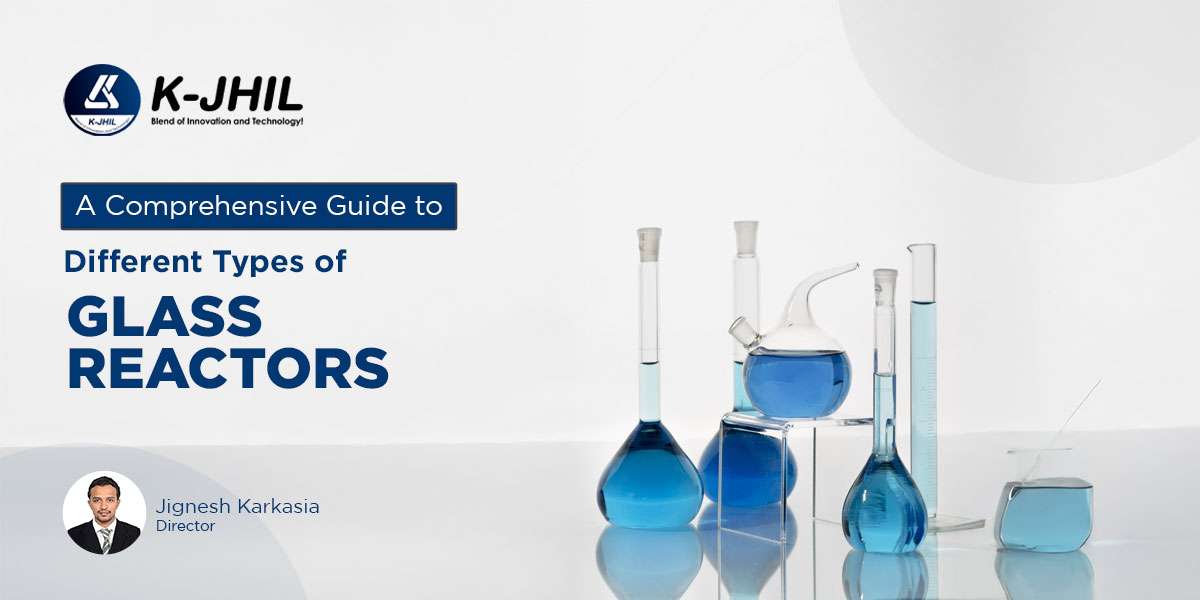
A glass reactor is a specialized vessel made of borosilicate glass, in which you can perform chemical reactions.
This borosilicate glass makes the reactor inert, heat-resistant and durable.
You know what I found the best about a glass chemical reactor design? It is completely transparent!
So can see through and stay informed about what’s happening inside the reactor when the reaction occurs.
Because of all these properties, it is widely preferred by various chemical, pharmaceutical, and biotechnology industries for safe chemical processing.
These reactors contain parts like:
- A jacketed vessel for temperature control
- Agitator for mixing
- Condenser
- Vacuum system
- Temperature control unit
All these components work together and control the pressure, heat and mixing.
The Types of Glass Reactors: A Quick Overview
Type of Glass Reactor | Characteristics |
Single-Layer Glass Reactor | Gets one layer of borosilicate glass and is used for simple mixing or low-temp reactions. |
Double-Layer (Jacketed) Reactor | It features an outer jacket allowing heating or cooling fluid to circulate for temperature control. |
Triple-Layer Glass Reactor | Comes with three layers for extra insulation and precise temperature management in sensitive processes. |
Photocatalytic Glass Reactor | Uses a source of light to perform chemical reactions and is highly used for photochemical research. |
Rotatable Lift Glass Reactor | It comes with a manual lifting mechanism for easy access, cleaning, and improved operation. |
You can also compare a single vs double jacketed glass reactor to understand structural differences.
What are The Benefits of Using Glass Reactors?
While manufacturing facilities also use metal reactors, glass reactors have some unique benefits, which is why it is preferred by the industries we discussed above.
Let me walk you through those benefits:
- Transparency: Since glass reactors are transparent, you can easily see through them, keep track of the reaction, and ensure it is going as expected.
- Chemical Resistance: Since glass machines are made of Borosilicate glass, they can resist corrosion from strong acids, bases, and solvents.
- Thermal Stability: It can even handle a sudden surge in temperature without cracking the glass.
- Cleanability: These glass reactors’ non-porous and smooth surface makes them easy to clean and prevents contamination.
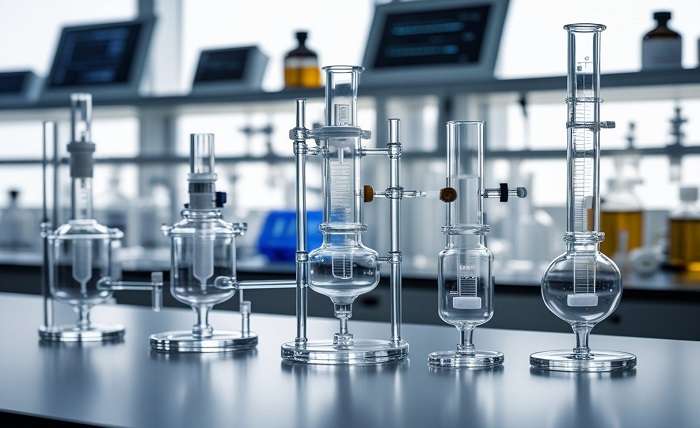
What are the Types of Glass Reactors?
Next, let’s explore the different categories of Glass reactors you can choose from.
1. Single-Layer Glass Reactor
This is the most basic type of Glass Reactor, which can perform chemical reactions in controlled conditions.
These are the properties you can expect from a Single-Layer Glass Reactor:
- The reactor won’t have an extra outer layer for temperature control.
- Can get external temperature controlling systems.
- It can perform distillation and reflux together.
- Used in chemical synthesis, pharmaceutical research, distillation and purification.
- They are cost-effective, and their maintenance is easy.
- This reactor is ideal for small-scale operations or simple reactions.
2. Double-Layer (Jacketed) Glass Reactor
In the case of a jacketed glass reactor, it gets two layers of insulation or jacket, giving you more control over the temperature.
Here’s what this reactor offers you:
- There’s a water layer in the first insulation layer.
- The second layer provides extra insulation, having a vacuum unit in it.
- Integrates with temperature sensors.
- Comes with PTFE discharge valves that can discharge substances quickly.
- It can maintain the reaction temperature and keep it stable.
- The Jacketed Glass Reactors are mainly used in chemical synthesis, crystallization, and pilot-scale production processes.
Pro Tip: Check out this blog that offers a detailed exploration of the numerous benefits of these chemical synthesis reactors.
3. Triple-Layer Glass Reactor
In this type of glass reactor vessel, an extra layer of insulation is added between the outer and inner layers to increase the glass’s overall thermal insulation.
Here’s how this design of the Triple-Layer Glass Reactor helps:
- Creates a nearly complete vacuum, which is important for making the reaction quicker.
- The walls are reinforced to make them resistant to explosions or fire outbreaks.
- In extended runs, the energy loss is low.
- Meant for high-precision reactions.
- Ideal for exothermic or endothermic reactions, high-energy synthesis, and energy-efficient chemical processing.
4. Photocatalytic Glass Reactor
The Photocatalytic Glass Reactors are mainly designed for performing the Photocatalysis reactions, and they need a light source to perform the reaction.
Let me walk you through its properties:
- It has a triple jacket immersion well.
- Supports catalyst testing and photopolymerization.
- The inner side has a double jacket made up of quartz.
- Comes with an external or internal light source, like a mercury lamp or a xenon lamp.
- Used in photochemistry, water treatment, drug discovery, and environmental testing.
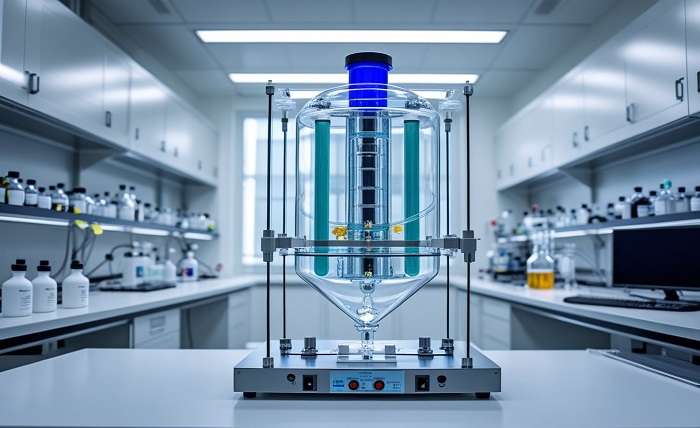
5. Rotatable Lift Glass Reactor
It is a glass machine with a manual lifting and rotating mechanism. It is mainly used in places where cleaning and maintenance are the top priorities.
To give you a clearer picture, here’s what these reactors usually include:
- Comes with a kettle-like component
- You can easily remove it and drain it
- Supports bulk handling
- Allows easy tilting, draining, and cleaning
- The height and tilt are adjustable
- Creates a greater vacuum, so there’s more space for the movement of reactants
- Best for the chemical and pharmaceutical industry
What are the Factors to Consider When Choosing a Glass Reactor?
The selection process might initially seem tough, but if done strategically, it can help you choose the right type of glass reactor vessel.
Here’s a simplified process you can follow to select a reactor that suits your manufacturing needs the best:
- Reaction Type: First, you need to decide on the type of reaction you want to perform. It can involve multiple steps or be high in volume. Each reactor has its own specific way of using it.
- Temperature and Pressure Requirements: If your chemical processes are endothermic or exothermic, then you may need a high-pressure glass reactor. As there can be high temperatures or extreme vacuum conditions.
- Volume: Next, you should identify the scale at which you are operating. It can be lab testing, pilot runs, or full-scale production. The reactor should have the capacity to handle the volume of the chemicals you’re working with.
- Chemical Compatibility: If your reactor has PTFE linings with borosilicate glass, it can ensure safety and durability and survive highly corrosive chemicals.
- Automation: Modern production lines are all about efficiency and automation. Therefore, you need to define the level of automation you need in your reactors. It can be fully automated for efficiency or manual for extra precision.
- Vendor Support: You should partner with a trusted glass reactor manufacturer who can offer technical support post-delivery and also have spare parts available.
Get Reliable Glass Reactors from K-Jhil Scientific!
Your manufacturing facility may perform both simple and complex chemical reactions.
And, if you’re looking for one reactor that can efficiently perform both, we highly recommend getting a reliable glass reactor vessel.
But that reliability and quality only come with experience!
And for the last three decades, we have been manufacturing advanced high-pressure glass reactors of different types that are:
- Designed to handle complex chemical processes
- Come with the automation that your modern production line needs
So, contact our experts at K-JHIL Scientific today for custom reactor systems built just for you and get end-to-end support for your glass reactor infrastructure!
What are the Different Types of Glass Reactors: FAQs
1. Can glass reactors handle high pressure?
Generally, glass reactors are engineered to handle moderate pressure. But if you want them to handle higher pressure levels, they would require extra metal jackets to reinforce them. Basically, you need to customize them a bit to make them safer and more durable.
2. How do I maintain a glass reactor?
You can maintain glass reactors by:
- Cleaning it with compatible solvents after every batch
- Avoid putting abrasive materials
- Regularly inspect the seals and joints
- Storing in a dust-free area
- Following the manufacturer’s guidelines
3. Is a jacketed reactor always better than a single-layer reactor?
No, a jacketed reactor isn’t always better than a single-layer reactor. Jacketed reactors offer temperature control, which is ideal for heating or cooling processes. However, single-layer reactors are simpler, cost-effective, and sufficient for ambient-temperature reactions. Your choice depends entirely on process requirements and budget.