
Decided to take your experimental production to the next level? Before you invest millions in a full production facility, you will need a pilot plant to test your operations.
A pilot plant enables you to test your ideas well before they are executed on a large scale. It allows you to gather vital data from your small-scale production.
But not all vendors can provide the quality you need and deserve. This is why you need to choose the right one that is worthy of your investment.
Let me walk you through the steps for finding and evaluating the right supplier. The steps below will help you evaluate the right pilot plant manufacturers in India.
What is a Pilot Plant?
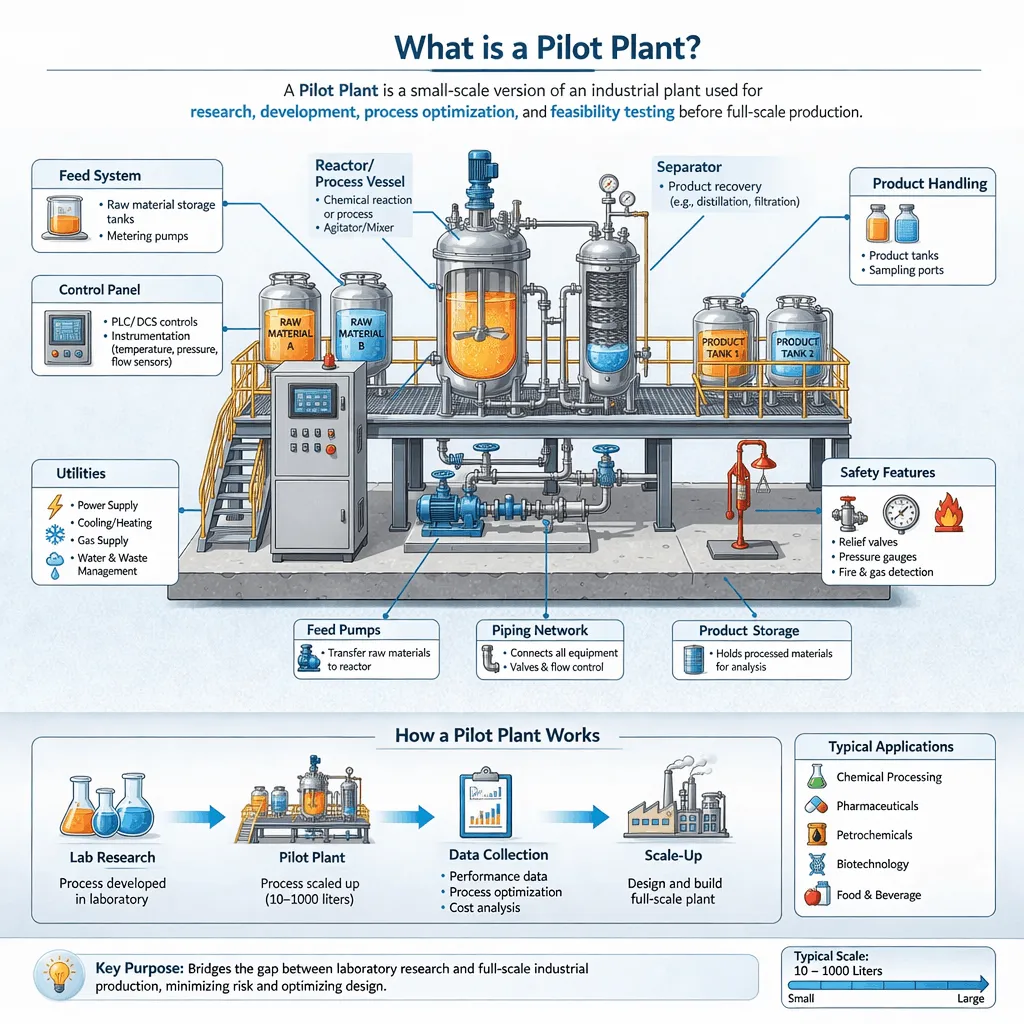
Before we look into how you can partner with a supplier, it’s best to clear the basics. This includes understanding how a pilot plant functions and its benefits.
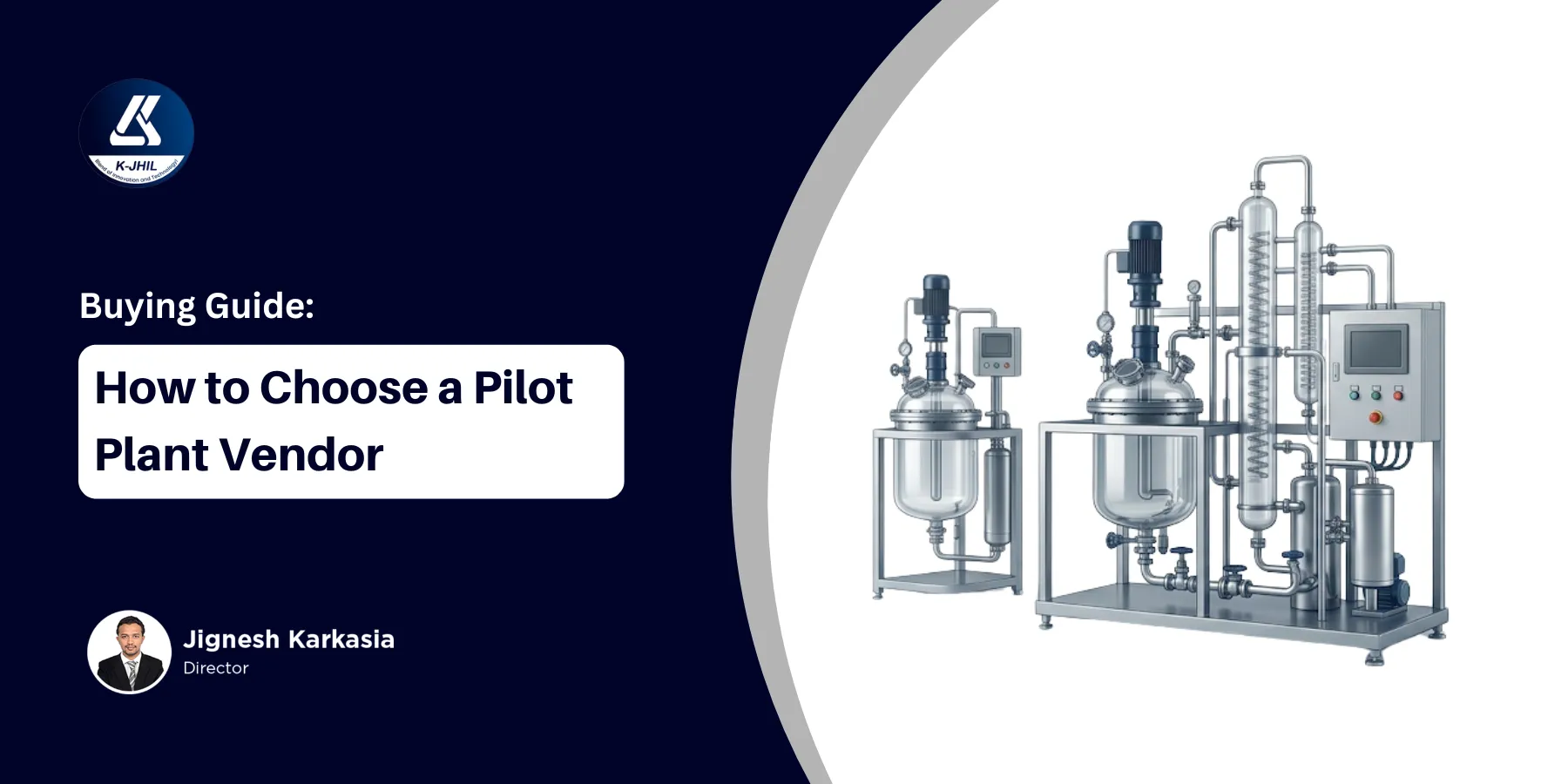
An easy way to think about a pilot plant is as a smaller version of a large-scale model. Instead of working with tonnes of material, you use kilograms.
While the scale may be smaller, the base functionality remains the same. It helps you mimic the reaction you will carry out every day in your large-scale manufacturing methods. Many such pilot plants use jacketed glass reactor vessels built on a smaller scale.
Moreover, a pilot plant can be used to test new processes and train operations. It can also generate small-scale samples to prove that your technology works.
Key Factors to Evaluate Your Pilot Plant Suppliers
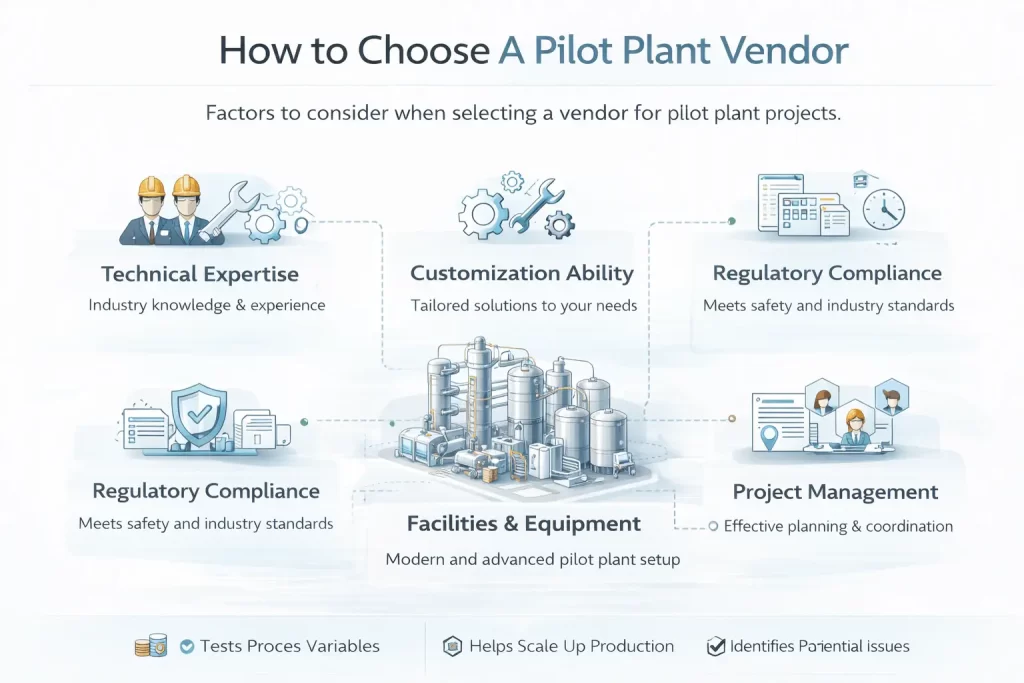
These are the main factors you should consider while finding the right pilot plant equipment suppliers:
1. Experience and Track Record
Nothing is more indicative of quality and reliability than a supplier who has decades of industry experience. This longevity usually means that they have been adding significant value in the market.
2. Technical Capabilities
The right vendor should have knowledge that goes beyond basic fabrication. This includes expertise in advanced manufacturing designs such as CSTR (Continuous Stirred Tank Reactor).
Moreover, the supplier should also understand how chemical distillation and heat exchangers work. This technical knowledge ensures that their designs and pilot reactors are made for these exact purposes.
3. In-House Manufacturing vs. Brokering
Many companies merely resell industrial equipment. They may claim quality assurance and guarantees, but a broker can only go so far to assure them.
What you need is a supplier that also manufactures pilot plants itself. Companies like these can offer far superior quality control and easier problem-solving than a broker.
Questions To Ask Shortlisted Vendors
Now that you know the factors to keep in mind, here are the questions you should ask these vendors:
| Question | Why It Matters |
| How many pilot plants have you built in my industry? | Industry experience means fewer surprises. |
| Do you have in-house fabrication? | In-house means better quality and faster fixes. |
| What safety features are standard? | Pilot plants handle real chemicals where safety isn’t optional. |
| Can you handle automation and data collection? | Good control systems are needed for accurate data. |
| What’s your after-sales support like? | Things break. You need someone who answers the phone. |
| Will you help with installation? | Delivery is not the end. Commissioning is where real work begins. |
Red Flags to Watch Out For in Pilot Plant Vendors
Below are the concerning issues and factors you need to look out for while judging pilot plant vendors:
1. Vague Answers About Past Projects
Pilot plant equipment suppliers that cannot describe similar projects in detail can be concerning.
Make sure that you ask for proof if you have doubts concerning their credibility. Note that any reputable company would be happy to discuss its experience with you.
2. No Interest in Your Process Details
A good vendor will ensure they understand your chemistry and manufacturing goals. This ensures that their equipment can handle your everyday production.
If they are not interested in the same, it may be because they are just a broker looking to make money. I would advise you to partner only with suppliers who are interested in learning more about your needs.
3. Poor Communication During Sales
Honest and clear communication is very important for any reputable pilot plant vendor. If they are slow and vague in their responses, it will only get worse once they take your money.
4. No Regulatory Understanding
Your pilot plant must meet certain regulatory requirements. Your vendor should be aware of the same and plan their fabrication accordingly.
Hidden Costs of Buying a Pilot Plant
Here are the hidden costs you may face while purchasing a pilot plant:
- Heavy installation costs for the plant
- Training costs for your team
- Spare parts in case of problems or failures
- Maintenance costs of the pilot plant
Conclusion: Making Your Final Decision
Choosing the right pilot plant vendor is essential for the success of your entire production. The accuracy and precise nature of your pilot plant will determine your success in the manufacturing industry.
For reliable execution and exceptional support, I recommend choosing K-Jhil Scientific as your pilot plant vendor.
They have over three decades of experience in both design and manufacturing advanced industrial equipment. K-Jhil has already established itself as one of the best pilot plant manufacturers in India.
Moreover, they understand the exact science behind the equipment. From the intricacies of CSTR design to gold refinery machines, K-Jhil is truly an expert. Their in-house manufacturing allows them to ensure the quality and sustainability of their products.
One of the best things about K-Jhil is its excellent technical support. From installation to after-sales needs, their service keeps pilot plants running smoothly for decades.
Ready to discuss the next steps on your own pilot plant design? Contact K-Jhil today and let a technical expert guide your next manufacturing venture.
FAQs
1. What is a pilot plant, and why do I need one?
A pilot plant is a small-scale version of a full industrial process. It bridges the gap between lab experiments and commercial production. You need one to test your process, train operators, generate customer samples, and prove your technology works before investing in a full-scale facility.
2. Who are the top pilot plant manufacturers in India?
Leading pilot plant manufacturers in India include K-JHIL Scientific (with over 30 years of experience), Xytel India (established in 1992), and Buchiglas India (Swiss technology). When choosing, look for industry experience, in-house manufacturing, and strong after-sales support.
3. What equipment is typically included in a pilot plant?
A pilot plant includes various unit operations depending on your process. Common equipment includes CSTR (Continuous Stirred Tank Reactors), distillation columns, heat exchangers, pumps, and control systems. The exact setup depends on what you’re trying to produce.
4. What can a pilot plant be used for?
A pilot plant can be used for multiple purposes: testing new chemical processes, collecting data for scale-up, training operators, producing samples for customer trials, and validating equipment performance before full commercial investment.
5. How do I choose the right pilot plant equipment suppliers?
Look for vendors with relevant industry experience, in-house fabrication capabilities, strong process engineering knowledge, and proven after-sales support. Ask for references, visit their facility if possible, and ensure they understand your specific process requirements.