
By the K-Jhil Scientific technical team, drawing on 30+ years building distillation and extraction systems for aroma, pharma, and specialty chemical plants.
QUICK ANSWER
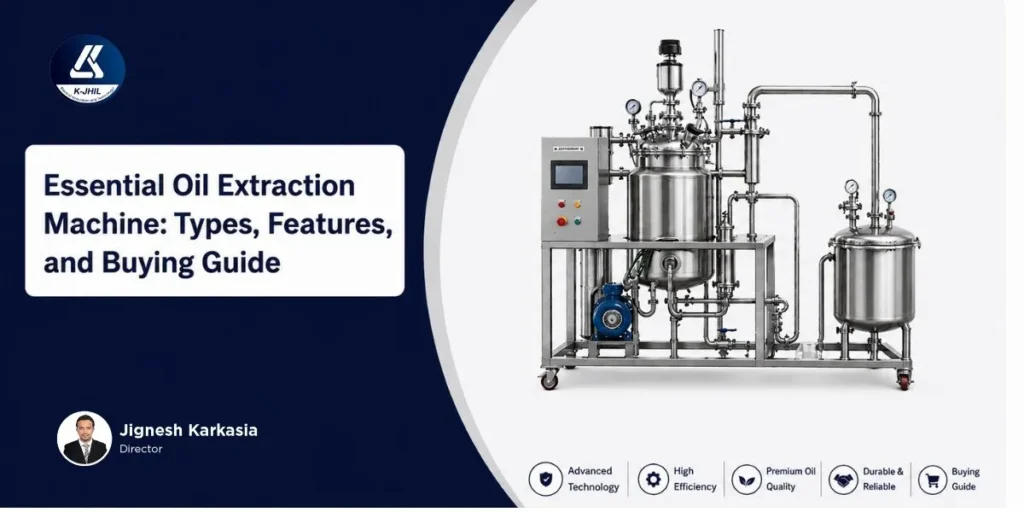
An essential oil extraction machine gets the aromatic oil out of the plant and leaves the rest, and how it does that depends on what you are running. Steam or water distillation handles most botanicals, solvent extraction takes the delicate florals, cold press does citrus, and supercritical CO2 covers pharma and high-value resins. Price in India runs a wide spread, from about Rs 1 lakh for a small field still to Rs 20 lakh and up for a full plant, moved mostly by capacity, material, and automation.
Buy the wrong machine and you find out at the worst time. Mid-season, plant piling up, and the still cannot keep pace or the oil comes out off-grade.
An essential oil extraction machine is a capital decision, not a catalog pick. It has to match the botanical you run, the volume you push through it, and the grade your buyer will accept.
This guide walks the machine types, the parts worth checking, what drives the price, and how to match a piece of essential oil extraction equipment to your material. Written from the equipment side, since that is where the money is won or lost.

What an Essential Oil Extraction Machine Does
An essential oil extraction machine pulls the volatile aromatic oil out of plant material and leaves the rest behind. Different machines do it different ways, but the job never changes.
Some sellers call it an essential oil extractor machine, others a distillation unit or an extraction plant. The label shifts with the catalog. What matters is the process inside and whether it fits your material.
A good essential oil extractor machine does three things well: it gets the oil out at high recovery, it does not taint or degrade it, and it repeats that batch after batch. Miss any one and the machine costs more than it ever saved.
Types of Essential Oil Extraction Machines
There is no single machine that does everything. The market splits into a handful of types, each built around a different extraction principle, and the right essential oil extraction unit depends on your botanical.
Steam and Hydro Distillation Machines
This is the workhorse category, and most essential oil distillation equipment on the market sits here. Steam distillation keeps the boiler separate and passes steam up through the charged still, while hydrodistillation sits the botanical in boiling water instead.
An essential oil distillation machine of this kind needs a still, a boiler or steam source, a condenser, and a separator to part oil from water. It suits heat-tolerant leaves, herbs, wood, and spice, from mint and lemongrass to clove and cardamom. For the standard vessel and condenser build, our simple distillation system shows the layout.
Distillation covers the bulk of commercial output, which is why most buyers start with an essential oil distillation machine. Capacities usually come in standard batch sizes of 50, 100, 200, and 500 kg of charge.
Fractional Distillation Units
Distillation hands you a crude oil. If you need to refine it, to split menthol from mint or separate grades, you step up to a machine that separates by boiling point across many stages.
This is a second machine, not a setting on the first. Our fractional distillation unit handles that refining step for producers who sell to a named grade.
Liquid-Liquid Extraction Units
Not every oil comes out by heat. Delicate florals and low-yield material go through solvent extraction, a form of the liquid liquid extraction process, where one liquid pulls the target compound out of another.
A liquid liquid extraction unit washes the botanical in a food-grade solvent, then recovers the solvent and separates the aromatic extract. It is the route for jasmine, rose, and tuberose, where heat would ruin the aroma, and the output is an absolute rather than a distilled oil.
CO2 Supercritical and Cold Press
Two more machines round out the field. A supercritical CO2 rig extracts at low temperature with pressurized carbon dioxide and leaves zero solvent residue, which suits pharma and high-value resins, though the capital cost is steep.
Cold press is the odd one out, a mechanical press used almost only for citrus peel. Neither is a general-purpose machine, but both fill gaps that distillation cannot.
PRO TIP A quote that just says “extraction machine” tells you nothing. Ask which process it runs, what it is built from, and the batch capacity in kg before you compare prices, since a steam unit and a solvent unit at the same number are not the same purchase.
The Core Parts of an Extraction Machine, and What to Check
Strip any piece of essential oil distillation equipment down and the same core parts decide how well it works. Check these before you check the price.
The still or charge vessel holds the botanical and takes the heat. The condenser cools the vapor back to liquid, and its sizing has to match the still, since an undersized condenser throttles the whole essential oil extraction unit. The separator, often a Florence flask, parts oil from water by density.
A fractional machine carries more inside: trays or packing, a reflux divider, and distributors. Our guide to the parts of fractional distillation covers each one and why it matters. Get the internals wrong and the machine will weep, flood, or quietly underperform.
Material of Construction: Borosilicate Glass, Glass-Lined, or Steel
Two machines can look identical on the floor and behave nothing alike. The material your essential oil extraction equipment is built from decides corrosion resistance, purity, and how long the unit lasts.
Stainless steel is common and fine for many oils, but aggressive or acidic feeds corrode it over time and can taint the product. Borosilicate 3.3 glass shrugs off nearly every chemical, stays inert with whatever you run, and lets the operator see the process. Glass-lined steel carries the same chemistry into larger, higher-pressure shells.
For pharma, food-grade, or corrosive duty, glass or glass-lined is the safer specification. It costs more up front and earns it back in purity, lifespan, and batches that do not fail.
WATCH OUT Copper and thin-gauge stainless stills are cheap for a reason. Run an acidic oil through the wrong metal and it reacts, and you only find out when the oil comes back tainted or the wall starts pitting. For regulated or corrosive work, get the wetted material and its standard on paper before you sign.
Essential Oil Extraction Machine Price in India
Price is the first question most buyers ask, so let me be straight about the numbers. Treat them as market bands, since the essential oil extraction machine price swings with capacity, material, and automation.
A small field or portable still runs from about Rs 1 lakh to Rs 2.5 lakh. A steam distillation plant in the common 50 to 500 kg range sits around Rs 5 lakh to Rs 12 lakh. A full manufacturing line with refining and controls can climb toward Rs 20 lakh and beyond.
Three things move that number more than anything else: batch capacity, the material of construction, and how much automation you add. A borosilicate or glass-lined unit costs more than plain steel, and a fractional or solvent line costs more than a simple still.
WATCH OUT The cheapest quote almost never stays the cheapest. Undersize the still or thin the wall and the saving comes straight back as lost batches and an early replacement. Price the running cost over five years, not the sticker on day one.
PRO TIP Size the machine to your botanical calendar, not your best crop. A 500 kg plant that sits idle nine months a year loses to a right-sized unit that stays busy across mint, lemongrass, and spice seasons, so match capacity to steady throughput, not the peak.

How to Choose the Right Machine for Your Material
The machine mostly picks itself once you answer three questions. Match it to the work and the decision gets simple.
Choose a steam or hydro distillation machine if you run heat-tolerant leaves, herbs, wood, or spice at volume, which covers most producers.
Choose a liquid-liquid extraction unit if your material is a delicate floral that heat ruins, or one that yields too little to distill, which is where the liquid liquid extraction process fits.
Choose a fractional distillation unit if you already have crude oil and need to refine it to a saleable grade like menthol.
Choose CO2 or cold press if you need zero residue and pharma grade, or you are pressing citrus peel.
When two routes could work, run a small batch each way and compare yield and quality before you buy the plant. The right machine is the one your grade and volume justify, not the biggest one on the floor.
Extraction Machine Types, Compared
The main types of essential oil extraction equipment line up like this on what actually decides a purchase. Read the prices as market bands, since they shift with capacity and build.
QUICK STAT Standard batches run 50, 100, 200, or 500 kg of charge, and most botanicals give up only low single-digit percentages of oil. At those yields, an essential oil extraction unit that leaves oil in the spent biomass bleeds money on every batch, which is why recovery beats sticker price.
Choosing Your Extraction Machine
Take away the detail and the right essential oil extraction machine comes down to three things: your botanical, your batch size, and the grade you sell to. Pin those down and the type, material, and capacity follow.
At K-Jhil Scientific, we build distillation and extraction systems in borosilicate glass and glass-lined steel for aroma, pharma, and specialty chemical producers. If you are specifying a machine and want it built around your material rather than pulled off a price list, Contact Us before you commit.
Sources and References
The figures in this guide draw on the following:
Market price ranges compiled from Indian equipment suppliers and listings for steam distillation plants, field units, and full lines.
Standard batch-capacity conventions for essential oil distillation plant (50 to 500 kg per batch).
ISO 3585 borosilicate glass reference for material of construction.
Frequently Asked Questions About Essential Oil Extraction Machines
1: What is an essential oil extraction machine?
A: It is equipment that separates aromatic oil from plant material, usually by steam or water distillation, solvent extraction, cold pressing, or supercritical CO2. The type depends on the botanical and the grade you need.
2: What types of essential oil extraction machines are there?
A: The main types are steam and hydro distillation machines, fractional distillation units, liquid-liquid extraction units, CO2 supercritical rigs, and cold presses. Well-built essential oil distillation equipment covers most commercial production.
3: How much does an essential oil extraction machine cost in India?
A: As a market range, a small field still runs from about Rs 1 lakh, a steam distillation plant from around Rs 5 to 12 lakh, and a full line toward Rs 20 lakh or more, driven by capacity, material, and automation.
4: What is the difference between an essential oil distillation machine and a solvent extraction unit?
A: A distillation machine uses steam or boiling water to carry the oil out as vapor, while a liquid liquid extraction unit dissolves it out with a food-grade solvent. Distillation suits heat-tolerant botanicals, and solvent extraction suits delicate florals.
5: What material should an essential oil extraction machine be made from?
A: Stainless steel suits many oils, but borosilicate 3.3 glass or glass-lined steel is better for corrosive, pharma, or food-grade duty, since it resists chemicals and does not taint the product.
6: What batch capacity do essential oil extraction machines come in?
A: Standard batch sizes are commonly 50, 100, 200, and 500 kg of charge, with custom capacities available. Size the machine to your steady throughput rather than your peak crop.
7: What is the liquid liquid extraction process?
A: It is a method where one liquid pulls a target compound out of another, used in solvent extraction of essential oils. A liquid liquid extraction unit washes the botanical in solvent, then recovers the solvent and separates the extract.
8: Which essential oil extraction machine gives the best quality?
A: For zero solvent residue and pharma grade, CO2 supercritical machines lead. For most botanicals, well-built distillation equipment in the right material gives excellent quality at far lower cost.
9: Can one essential oil extractor machine extract oil from any plant?
A: No. Heat-tolerant material suits distillation, delicate florals need solvent extraction, and citrus needs cold press, so most producers match the machine to their main botanicals.
10: What parts should I check before buying an extraction machine?
A: Check the still, the condenser sizing, and the separator, plus the internals on a fractional unit, along with the material of construction and its standard. These decide performance more than the price does.
11: What drives the price of an essential oil extraction machine?
A: Batch capacity, material of construction, and automation are the biggest factors. A borosilicate or glass-lined unit costs more than plain steel, and a fractional or solvent line costs more than a simple still.