
Fractional distillation separates a liquid mixture into its parts using their different boiling points. The mixture is heated, and its vapors rise through a fractionating column that stays cooler toward the top, so each part condenses at the height that matches its boiling point. Lighter fractions collect higher and heavier ones lower, which is how refineries split crude oil into gasoline, diesel, and other products.
Key Takeaways
- Fractional distillation separates liquids by boiling point using a fractionating column.
- The column works through repeated vaporizing and condensing at different heights.
- It reaches higher purity than simple distillation when boiling points are close, within about 25°C.
- Common uses include petroleum refining, solvent recovery, alcohol production, and chemical purification.
- Industrial units usually handle 10 to 500 liters, run up to about 300°C, and use borosilicate 3.3 glass or SS 304/316.
Chemical processing industries face complex challenges in separating components of liquid mixtures. As equipment manufacturers, we understand the technical demands of separation processes. Our years of manufacturing experience reveal the importance of reliable separation units.
Fractional distillation offers a reliable solution for separating components in industrial processes. Modern manufacturing incorporates advanced control systems to maintain optimal separation efficiency.
This comprehensive guide explores working principles, equipment setup, and operational procedures. Readers will discover essential components, maintenance requirements, and industry-specific applications of fractional distillation units.
Understanding the Principles of Fractional Distillation
The separation process involves heating a mixture until it reaches different boiling points. Industries use this technique to separate complex mixtures into their components.
For better clarity, you can compare simple distillation vs fractional distillation to understand efficiency differences.
How does Fractional Distillation Work?

The process begins when heat transforms liquid components into vapor at specific temperatures. Understanding how fractional distillation works requires knowledge of vapor pressure and boiling points. The vapor rises through a column while cooler components condense and flow downward.
- Different components separate based on their unique molecular weights and boiling points.
- Temperature gradients inside the column enable efficient component separation at each level.
Components of a Fractional Distillation Unit
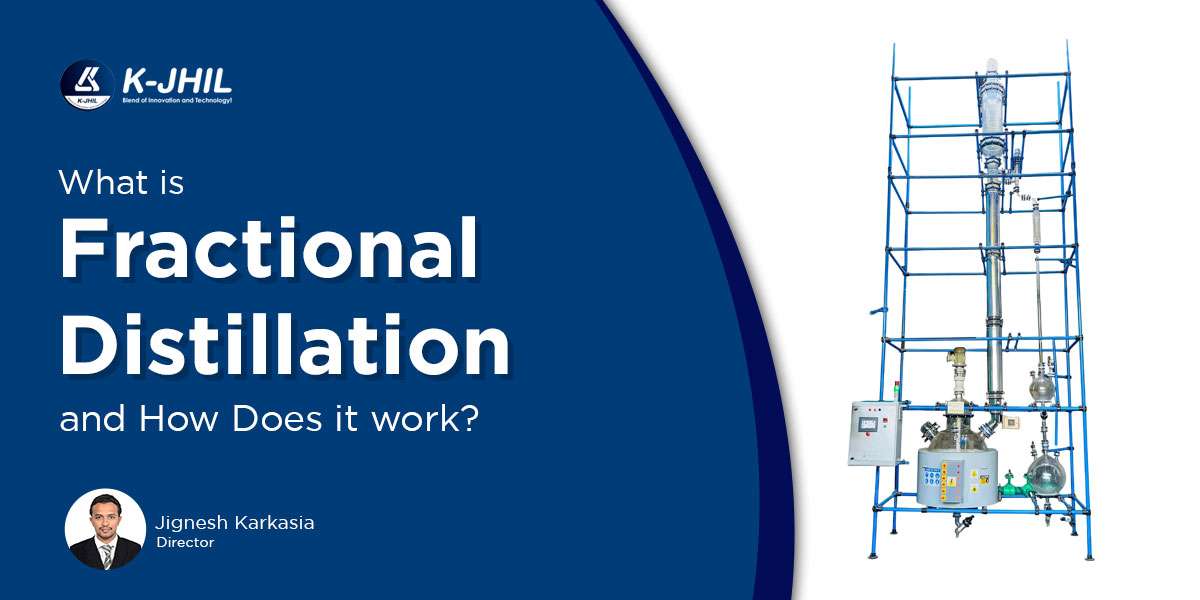
So how does fractional distillation work? In essence, it is a complex process that mainly involves working with a fractionating column.
The fractionating column contains trays or packing material for vapor-liquid contact exchange.
- The condenser at the top converts the purified vapor back into a liquid.
- Collection vessels gather separated components at different heights within the column.

The Fractional Distillation Process
Continuous cycles of vaporization and condensation occur within the distillation column. Liquid-Liquid Separation principles guide these cycles to achieve optimal results. The process repeats until the desired separation purity levels meet industry standards.
- The plates in the column act as steps where separation occurs repeatedly.
- Precise temperature control ensures consistent product quality throughout operation.
Essential Components of Fractional Distillation
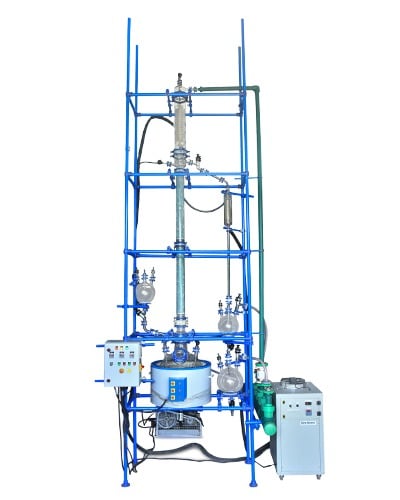
The setup consists of specialized components designed to achieve precise separation of mixtures. Modern facilities integrate advanced control systems to maintain optimal performance during the separation.
Fractionating Column: The Main Fractional Distillation Equipment
The fractionating column is the heart of fractional distillation equipment. The column height determines the degree of separation achieved during the process.
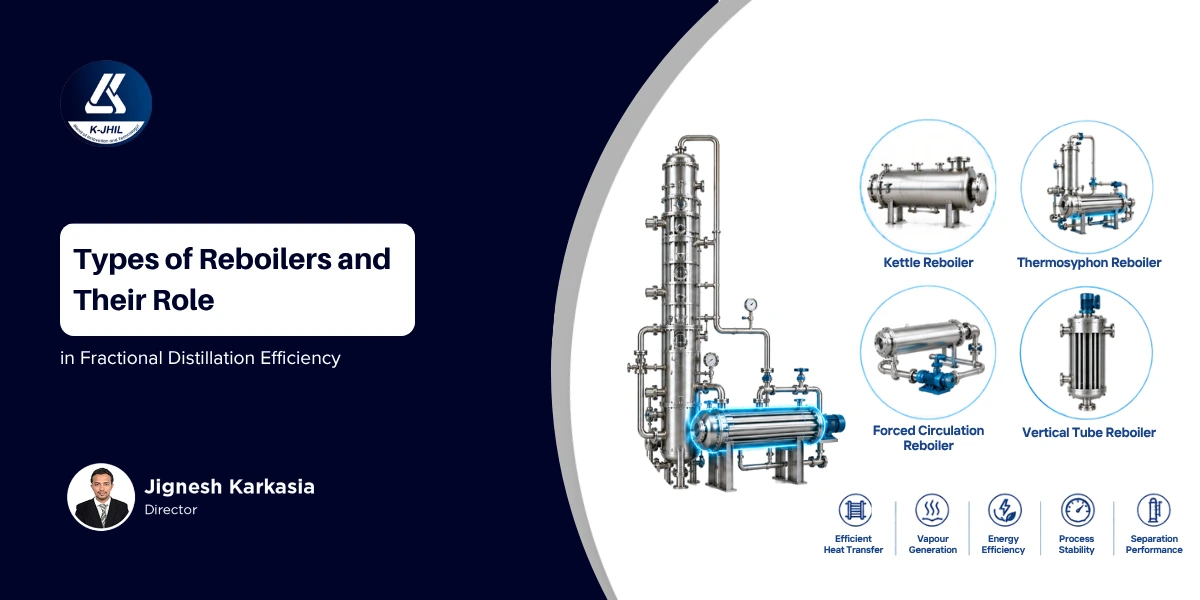
- Reboilers provide controlled heat input to maintain a steady upward vapor flow.
- Trays or packing materials create surface area for vapor-liquid contact inside columns.
| Specification | Typical Industrial Range |
|---|---|
| Capacity | 10 L to 500 L (custom to higher) |
| Operating temperature | Up to 300°C |
| Pressure | Atmospheric to full vacuum |
| Material of construction | Borosilicate 3.3 glass, SS 304, SS 316 |
| Column internals | Structured packing, random packing, or trays |
| Common applications | Petroleum, solvents, alcohol, pharma, fine chemicals |
How to Set Up the Fractional Distillation Unit
Proper operational procedures ensure the safe and efficient separation of complex liquid mixtures. The setup phase requires careful attention to equipment conditions and safety protocols. Operators must verify all connections and seals before starting the distillation process.
- All valves must be checked for proper positioning before introducing the feed.
- Temperature controllers require calibration to maintain precise heating throughout the process.
- Pressure gauges need verification to ensure they display accurate readings.
Monitoring and Control
Operators track multiple parameters through advanced control systems during the distillation process. Regular sampling helps maintain product quality and optimization of operating conditions. The control room displays real-time data from various sensors throughout the unit.
- Temperature profiles must stay within specified ranges for optimal separation.
- Pressure readings require constant monitoring to prevent system instability.
- Flow rates need to be adjusted based on product quality requirements.
- Operators document all parameter changes for process optimization and troubleshooting.
Applications and Benefits of Fractional Distillation

Industries worldwide rely on fractional distillation for separating complex mixtures into pure components. This technique enables the production of essential products used in daily life.
Industrial Uses of Fractional Distillation
The petroleum industry separates crude oil into gasoline, diesel, and other valuable products. Chemical manufacturers purify raw materials for producing plastics, pharmaceuticals, and industrial solvents.
- Oil refineries process millions of barrels daily through large distillation columns.
- Beverage producers create spirits of specific alcohol content using this method.
- Food industries separate essential oils and flavoring compounds for various products.
Laboratory Applications
Research laboratories use smaller distillation units to purify compounds for experimental work. Universities teach distillation principles using specialized glass apparatus for hands-on learning.
- Scientists analyze unknown mixtures by separating their individual components.
- Quality control labs verify product purity through precise distillation techniques.
Advantages of Fractional Distillation
The process allows continuous operation without interruption for extended production periods. Companies achieve high product purity while maintaining consistent quality standards.
- Multiple products can be obtained from a single separation process.
- The method reduces waste by recovering valuable components from mixtures.
Maintenance and Safety
Regular maintenance schedules ensure reliable operation and prevent unexpected equipment failures. Safety protocols protect operators while maintaining optimal performance of the distillation system.
Operating the Fractional Distillation Unit
The unit requires proper startup procedures to maintain consistent product quality standards. Operators monitor critical parameters to ensure safe operation within design specifications.
- Temperature gauges need regular calibration to maintain accurate readings during operation.
- Pressure relief valves undergo periodic testing to ensure proper emergency response.
Best Practices for the Fractional Distillation Process
Regular cleaning prevents fouling and maintains efficient heat transfer in system components. Maintenance teams inspect seals and gaskets to prevent potential leaks.
- Equipment inspection schedules must align with manufacturer recommendations.
- Documentation helps track maintenance history and identify recurring issues.

Conclusion
Fractional distillation remains essential for modern industrial processes across various manufacturing sectors. In a Fractional Distillation Unit, the process delivers high-purity products while maintaining efficiency in production operations.
- Industries continue to improve distillation technology to achieve better separation and greater energy efficiency.
- Regular maintenance and operator training ensure safe and reliable system operation.
- Modern control systems enhance process automation and product quality consistency.
To ensure proper understanding of the principles of fractional distillation and the fractional distillation process, expert guidance is required. This is why I recommend partnering with our experts at K-Jhil Scientific for its successful implementation.
With precision-engineered fractional distillation equipment, K-Jhil can help enhance your control over the entire separation process. Our industrial solutions have advanced systems and components that enable high-performance fractionating processes with consistent results.
Joining hands with K-Jhil will help you gain a technical ally who can assist with your setup and provide post-sales support. Our team will suggest optimisations that will maximise your outputs and increase their purity.
Aiming to future-proof your fractional distillation process? Contact our experts at K-Jhil today and receive a free consultation!
FAQs
1. What is the basic principle of fractional distillation?
The core principle of fractional distillation is the separation of liquid mixture components by repeatedly vaporizing and condensing them within a column, leveraging their different boiling points to achieve high-purity products.
2. How does fractional distillation work in an industrial unit?
How does fractional distillation work? It works by heating a mixture in a fractional distillation unit, where vapors rise through a fractionating column, condense at specific heights, and are collected as separate components based on their unique boiling points.
3. What are the key stages in the fractional distillation process?
The fractional distillation process involves continuous cycles of controlled heating, vaporization, condensation within a column, and collection, all managed by precise temperature and pressure monitoring to ensure efficient separation.
4. What equipment is essential for a fractional distillation unit?
Essential fractional distillation equipment includes the boiler/reboiler, a fractionating column (with trays or packing), a condenser, and precise control systems for temperature and pressure, all integral to the unit’s operation.
5. Why is the fractionating column the heart of fractional distillation equipment?
In fractional distillation equipment, the fractionating column is crucial as it provides the surface area for vapor-liquid contact, enabling the repeated separations that are fundamental to how fractional distillation works.
6. How is fractional distillation different from simple distillation?
Simple distillation works when two liquids have boiling points far apart, roughly 70°C or more. Fractional distillation adds a packed or tray column, which lets it separate liquids with much closer boiling points, down to a few degrees. For close-boiling mixtures, fractional is the only one that reaches usable purity.
7. What does an industrial fractional distillation unit cost?
Price depends on capacity, material, and automation, so a benchtop glass unit and a large steel system sit far apart. A small glass unit starts modest, while an industrial skid-mounted system runs into several lakhs. Share your mixture and throughput with a manufacturer for a costed proposal.
8. What capacity fractional distillation unit do I need?
Match the unit to your batch or daily throughput, with headroom for growth. Lab and pilot work usually fits 10 to 50 liters, while production lines run 100 to 500 liters or more. Oversizing wastes energy and undersizing bottlenecks output.
9. Should I choose a packed column or a tray column?
Packed columns suit smaller throughput and vacuum service, where low pressure drop matters. Tray columns handle larger, steady flows and are easier to clean and inspect. The right pick depends on your throughput, pressure, and the mixture.
10. What materials are fractional distillation units made from?
Borosilicate 3.3 glass is common for corrosion resistance and a clear view of the process. Stainless steel 304 or 316 is used for larger or higher-pressure duties. The choice comes down to the chemicals handled and the operating conditions.