
If you’re reading this, you’ve probably faced one of these frustrations:
What's on this page:
- Your batch reactors keep delivering inconsistent results.
- Scaling up laboratory reactions is becoming increasingly challenging.
- The heat control protocols are failing to keep exothermic reactions in check.
I get it!
Fine chemical synthesis demands precision, but traditional methods fight you at every step.
Today, I’ll show you how continuous stirred tank reactors are solving the problems of synthesizing fine chemicals at scale.
I’ll break down:
- The advantages of CSTRs,
- How can they solve the problems you’re facing
- Why CSTRs are the future of fine chemical industrial processing equipment
Let’s dive in…
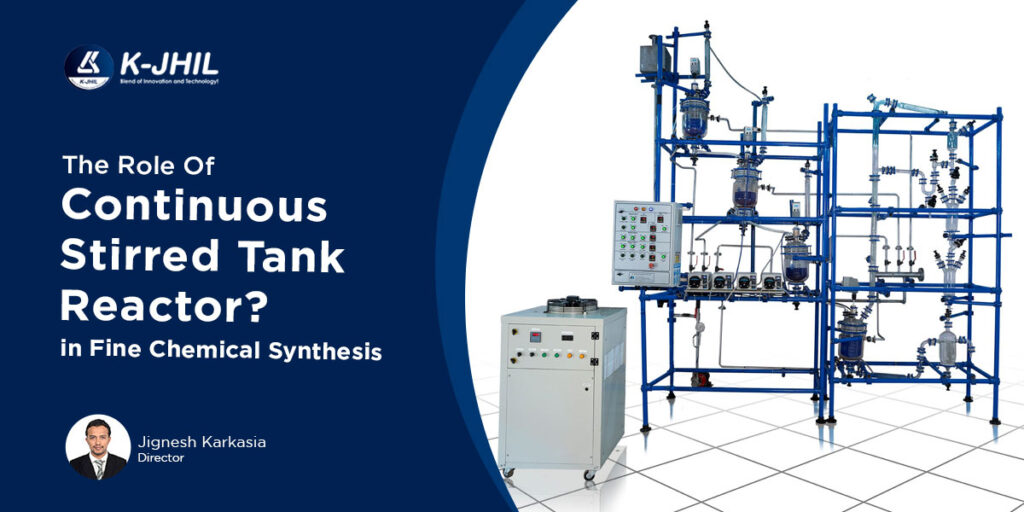
What is a Continuous Stirred Tank Reactor?
A Continuous Stirred Tank Reactor (CSTR) is a type of chemical reactor that allows you to add reactants nonstop and remove products as and when they’re ready.
Let me briefly recount its basic working principle:
1. Constant Stirring
As its name suggests, a Continuous Flow Stirred Tank Reactor stirs chemicals and reactants at a uniform and constant rate.
So, you can be sure that CSTR-powered reactions will give you thoroughly mixed compounds with the highest degree of precision.
Plus, since CSTRs can work around the clock, they don’t require you to mix reactants in separate batches.
As a result, you can reduce the number of steps required for production and minimize downtimes.
2. Steady-State Operations
Second, CSTRs are created to enable Steady-State Operations.
This means your input will always result in desired outputs because reactants will be fed into the reactor at a steady rate.
Moreover, CSTRs create environments where the temperature, concentrations, and reaction rates remain highly stable at all times.
As a result, your tank will not accumulate waste materials: you’ll not have to worry about compromising the integrity of your reactor, reactions, or output!
What Role Do CSTRs Play in Fine Chemical Synthesis?
CSTRs are not the only instruments you can use for fine chemical synthesis.
However, if you’re working with large batches or slow reactions and need to produce large volumes of a product with consistent quality, a CSTR is your best solution.
Let me break down the precise role that CSTRs play in fine chemical synthesis:
1. Precision & Consistency
When you need to manufacture a million vials of a specific pharmaceutical product, you can’t compromise on even a single vial.
But if you use batch reactors, you’ll need to constantly ensure that the temperature is in the optimal range for your products.
You could solve the problem by using plug-flow reactors, but there is a high chance that this will result in clogs and exothermic reactions. And both of these will disrupt your operations, cause delays and lead to non-uniform products.
That’s where CSTRs can help you out.
They ensure uniform reactions, processes, and products. So, you’ll get exactly what you need and are expecting, without facing any downtime!
2. Scalability
Scalability is critical to growth.
So, once you’ve perfected a reaction through lab experiments or small-scale production, you’ll need a reliable instrument if you want exponentially larger volumes of your chemicals.
And if you’re using batch reactors, you’ll need to optimize every single reaction separately.
But scalability is one of the biggest advantages of CSTRs: you can easily and quickly expand production by increasing the reactor size or adding more units.
3. Handling Complex Reactions
Often, your end product will require multi-step synthesis for complex and high-value products.
In this case, you practically have no other option but to go for CSTRs.
This is due to the cascade control of a CSTR:
Cascades are connectors that compile multiple tanks into a single long operation. Simply put, they transform your production into an industrial assembly line!
Let me show you how this works:
- Your reactants first flow into a CSTR. They undergo an initial reaction under controlled conditions, ensuring optimal temperature, mixing and residence times.
- Then, the finished product flows directly into the next tank. Here, your compound is further refined and purified to yield the desired product.
- The CSTR cascades repeat this process as many times as needed, with specific tanks optimized for specific reactions.
Thus, continuous stirred tank reactors help you easily optimize reactions by defining precise conditions and volumes of reactants to be added or removed.
4. Temperature & Concentration Control
Controlling heat is both a difficult and critical aspect of chemical reactions.
Even slight temperature variations can lead to production failure, differences in batch quality, and a lot of time for reoptimization.
So, if your reactors are not equipped to handle and rectify temperature variations continuously, you could be facing significant production losses with every single operation!
CSTRs are different: as we’ve seen, they are built on the principle of steady-state operations.
So, they help you constantly adjust and optimize temperature, and ensure that undesired oxidation reactions don’t derail or delay your operations.
5. Integration with Continuous Manufacturing
Producing fine chemicals is one thing. You can easily do so with small-scale instruments and reactors.
But CSTRs help you supercharge your production process and are aligned with modern trends in industrial processing equipment.
They offer a high level of efficiency by ensuring that your operations neither stop nor compromise on the quality of the output.
Plus, CSTRs don’t just improve yields: they help you reduce inefficiencies because the reactions don’t result in any waste materials!
Industrial Applications of Continuous Stirred Tank Reactors
There are two reasons you should use CSTRs:
First, the advantages of CSTR are highly suited to fine chemical manufacturing. As we’ve seen, they make production faster, more efficient, and qualitatively better compared to other options like batch reactors or micro reactors.
However, the second reason is even more pressing: you don’t want to lose or concede an advantage to your competitors. If they’re using CSTRs, they’ll be able to make the same products as you, but better, faster, and smarter!
So, if you’re operating in any of the following industries, you can be sure that your competitors are either pivoting to or have already switched to CSTRs:
1. Pharmaceuticals
When it comes to the production of Active Pharmaceutical Ingredients, there’s a high premium attached to precision.
From reaction conditions to chemical compositions, every step and outcome needs to meet regulations, quality standards, and order sizes!
And a continuous flow stirred tank reactor is the only solution that’ll deliver all three, every single time, without any compromise!
2. Petrochemicals
The petrochemical industry is discovering new uses and is faced with new challenges every single day.
So, whether you’re converting unsaturated compounds into fuels and lubricants or producing high-grade plastics on a large scale, you’ll need a tank reactor that ensures controlled and uniform distribution of molecular weight!
Again, no other instrument excels at this quite like a CSTR!
3. Food & Beverage
A lot depends on your equipment when you’re fermenting beer, producing yoghurts, or modifying food ingredients.
You’ll need precise enzyme reactions and controlled conditions to produce F&B products that are safe for public consumption.
And nearly all these industries have switched to using CSTRs to meet precisely these objectives!
4. Biotech and Renewable Energy
As climate change reveals its effects more clearly by the day, biotech and renewable energy have experienced significant growth in demand.
So, whether it’s biomass conversion, enzyme production, or biofuel manufacturing, all of these processes depend heavily on CSTRs to deliver industrial volumes of renewable energy at scale!
5. Chemical Manufacturing
Chemical manufacturing is not just the #1 objective but also the biggest function of CSTRs.
They help you create chemicals like sulfuric acid, ammonia, and nitric acid at scale.
Plus, CSTRs are also extremely necessary to the production of speciality chemicals like chiral compounds with extremely high levels of purity.
So, if you’re operating in any of these industries, I highly recommend switching CSTRs!
Next Step: Experience the Magic of CSTR Yourself!
So, CSTRs offer a lot of benefits for fine chemical manufacturing.
They help you scale production, eliminate waste, increase efficiency, and ensure consistent output.
But all that’s in theory: will they actually work and give you the results you need?
There are two ways you can find out.
First, if any of your competitors have pivoted to using them, you can be sure that they’ve done the research for you.
And if not, you can be the trailblazer and reap the benefits of the first-mover advantage: connect with us today, and we’ll help you verify whether CSTR applications can actually deliver a competitive advantage to your production process.
Based on the result, you can ask us to manufacture customized CSTRs that you can steadily integrate into your operations!
Either way, once you’ve consulted with us, you can rest assured that you’ve tried everything you could to improve the throughput, quality, and efficiency of your operations!
Continuous Stirred Tank Reactors (CSTRs) in Fine Chemical Synthesis
1. What role does a continuous stirred tank reactor (CSTR) play in fine chemical synthesis?
A Continuous Stirred Tank Reactor (CSTR) is a type of industrial reactor that operates at a “steady-state,” so that your reactants are:
- Fed continuously
- Mixed uniformly
- Monitored for ideal production conditions
CSTRs ensure that the concentrations and temperatures of your reactions remain constant over time. This makes them ideal for scalable fine chemical synthesis, where both conditions and output need to be uniform and high-quality!
2. Which is better for fine chemical synthesis: CSTR or Batch Reactor?
We recommend CSTRs for fine chemical manufacturing because they offer:
- Zero downtime: production never stops, even if you need multi-step synthesis!
- Ideal for sensitive reactions: they offer Better heat and mass transfer.
- Higher consistency: they ensure uniform mixing and reduce impurities.
- Easier scalability: just increase reactor size or add units to match your production objectives.
3. How do CSTRs handle complex, multi-step reactions?
CSTRs can easily handle complex, multi-step reactions by using “cascades,” or multiple reactors in series. Through these, you can break down complex syntheses into optimized stages. For example, in pharmaceutical API production:
- CSTR #1 performs a Grignard reaction.
- CSTR #2 conducts hydrogenation.
- CSTR #3 purifies the product.
This approach minimizes side reactions and maximizes yield—something batch reactors can’t achieve efficiently.
4. Can CSTRs improve sustainability in chemical manufacturing?
Yes, CSTRs improve sustainability in chemical manufacturing by:
- Eliminating waste: Higher yields mean fewer byproducts.
- Reducing energy consumption: Steady-state operation avoids repeated heating/cooling (unlike batch reactors).
- Empowering greener processes: For example, aerobic oxidations in CSTRs replace toxic reagents with O₂.
In short, if you’re aiming for efficient, scalable, and sustainable fine chemical production, CSTRs are your best choice!