

According to the US Chemical Safety Board, the country witnessed 26 major chemical incidents across 15 states. This resulted in 5 fatalities, 17 serious injuries, and $700 million in damages.
What's on this page:
With the demand for continuous stirred tank reactors on the rise in the US and Asia Pacific markets, the importance of reactor safety systems has become even more critical.
From what we’ve observed over the years, as a hazard analysis and risk management equipment provider, human error, system failure, and process deviations are the three core causes of accidents involving CSTRs.
However, the good news is that you can manage and control all three parameters to ensure that you never face any of these problems in your operations. In this guide, we’ll discuss the common hazards in CSTRs, along with hazard analysis methods you can use for CSTRs and risk management strategies for CSTR Safety.
Let’s dive in.
CSTR Safety, Hazard Analysis, and Risk Management Guide: Table of Contents
- What is a CSTR?
- Common Hazards in CSTRs
- Hazard Analysis Methods for CSTRs
- Risk Management Strategies for CSTR Safety
- Real-World Case Study: The T2 Laboratory Explosion
- KJhil: Your Reliable Reactor Safety Systems Engineer
- CSTR Safety and Risk Management Guide: FAQs
What is a CSTR?
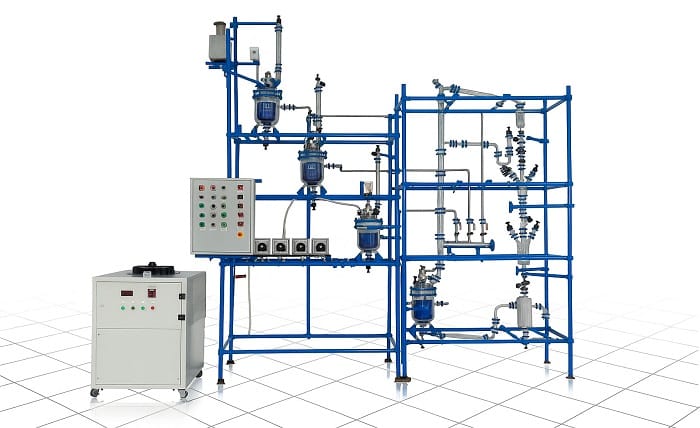
A continuous stirred tank reactor system is a tank where chemicals are constantly mixed to enable chemical reactions under specifically defined and controlled conditions.
Every CSTR has four core components:
- An Inlet Pipe
- The Agitator (the stirrer or the mixing blade)
- An Outlet Pipe
- Temperature and Pressure Control Systems (like the Cooling Jacket)
Insofar as hazards are concerned, there’s no one core component that is the major cause of reactor failures. In our experience, this usually depends on the nature of the chemical reactions or the overall condition (age, control system, etc) of your CSTR system. From what we’ve seen, it might even depend on the type of reactor you’re using (batch reactors vs. continuous flow stirred tank reactors).
Also Read: What are the Applications of a Continuous Stirred Tank Reactor?
Common Hazards in CSTRs
There are four major hazards in CSTRs that you should watch out for:
1. Runaway Reactions
One of the most common hazards in CSTRs is a runaway reaction. It’s like a pressure cooker that doesn’t have proper drainage and explodes as a result.
Real-World Case Study
The T2 Lab Explosion in Jacksolville, USA, involved a runaway reaction. The loss of cooling during the production of a gasoline additive led to the CSTR exploding. It resulted in 4 fatalities and 32 injuries, completely destroying the facility.
2. Leaks & Spills
Your CSTR can also leak or spill toxic chemicals that are dangerous to both human beings and the environment.
Real-World Case Study
This is exactly what happened in the Deepwater Horizon incident. A wellhead blowout in a continuous flow stirred reactor system led to 11 deaths, the spillage of 4.9 million barrels of oil, and $65 billion in cleanups and fines.
3. Mixing Errors
If your CSTR system, due to human error or equipment failure, starts adding the wrong chemicals into your reactor tank, it can lead to massive explosions or failed reactions.
In fact, it could be like pouring gasoline on fire.
Real-World Case Study
One such incident occurred at the Hebei Organic Facility in China, where wrong ratios in a batch-to-continuous transition led to 29 deaths and 46 injuries.
4. Equipment Failure
If even a small part of your CSTR system fails, you might consider yourself lucky if all you face is some downtime and missed deliveries.
Real-World Case Study
This is because equipment failure can lead to incidents like the 2025 Louisiana Honeywell Geismar Incident. When a heat exchanger ruptured in a unit very similar to a CSTR, it released harmful HF and chlorine gas. While the incident led to no fatalities due to quick evacuation orders, it did show that CSTR hazards are not exceptions even in 2025.
Hazard Analysis Methods for CSTRs
Hazard analysis for CSTRs is like a safety checklist that you should develop for your CSTR systems. There are two methods that enterprises around the world use for hazard analysis:
1. Hazard and Operability Study
The Hazard and Operability Study, or HAZOP Study, is when you create a team that brainstorms every possible failure which could threaten your CSTR system. Typically, you should include a mix of industrial engineers, CSTR technicians, worker union representatives, and a member of the executive team on the HAZOP committee.
2. Failure Mode & Effects Analysis
Another option is the Failure Mode & Effects Analysis. It involves trying to predict the conditions under which your CSTR system might break down. For example, if you think that a temperature sensor failure could lead to the reactor overheating, consider installing backup sensors.

Risk Management Strategies for CSTR Safety
The best way to predict and avoid CSTR failures is to put in place risk management strategies that will ensure the safety of your employees, equipment, and products.
There are three different components that we recommend including in your CSTR strategy:
1. Engineering Controls
This involves installing backup sensors, failsafes that stop reactions in cases of cooling failures, pressure relief valves, and emergency cooling systems.
Think of it as investing in safety infrastructure to ensure that you never face equipment failure during your CSTR reactions.
2. Administrative Controls
Second, you should have comprehensive training programs that train workers to react to potential or actual CSTR hazards. A good training program that ensures your workers are aware of the protocols created for their own safety is as good as a reactor safety system itself!
We also highly recommend scheduling and undertaking periodic maintenance checks. This will ensure that your equipment is in the best working condition.
3. Personal Protective Equipment
Lastly, we also recommend investing in top-of-the-line Personal Protective Equipment. It’ll help you gain worker confidence, pass regulatory inspections, and minimize the impact of CSTR hazards on your employees.
K-Jhil: Your Reliable Reactor Safety Systems Engineer
CSTR hazard analysis and risk management strategies can help you avoid multi-million-dollar CSTR disasters.
All you need is the right approach to safety and the right partner that can provide the best-in-class reactor safety systems equipment.
That’s where we at K-Jhil come in!
Over the decades that we have worked with enterprises and industries that use CSTRs for their operations, we have developed a range of failure detection equipment and risk management strategies to help them predict and prevent reactor safety systems.
For example, we have curated dedicated guides on how to use continuous stirred tank glass reactors to minimize the risks of accidents while maximizing profits.
So, whether you want a sample reactor safety plan for your operations or want to explore reactor safety systems you can use, why not reach out to our CSTR engineers?
We will help you find the ideal solution that aligns with human safety requirements, regulatory guidelines, and your operational budgets.
CSTR Safety and Risk Management Guide: FAQs
1. What is a CSTR, and why is hazard analysis critical for it?
A Continuous Stirred Tank Reactor (CSTR) mixes chemicals nonstop for reactions. Hazard analysis identifies risks like leaks or explosions, ensuring safer operations. Without it, incidents like the T2 Lab explosion can occur.
2. How do reactor safety systems prevent runaway reactions in CSTRs?
Reactor safety systems like emergency cooling and pressure relief valves act as “airbags” for CSTRs. They stop overheating (e.g., Tianjiayi Chemical explosion) by automating shutdowns during deviations.
3. What’s the difference between batch reactors and continuous flow stirred tank reactors?
Batch reactors process chemicals in fixed amounts, while continuous flow stirred tank reactors run nonstop. CSTRs need stricter hazard analysis due to constant operation (e.g., Deepwater Horizon spill).
4. Can AI improve hazard analysis for CSTR safety?
Yes! AI predicts deviations (e.g., temperature spikes) in real time, cutting risks by 40%. It’s like a “weather forecast” for reactor safety systems, preventing disasters before they happen.
5. What’s the #1 cause of CSTR failures, and how to avoid it?
Human error (e.g., mixing mistakes like Hebei Organic Co.) tops the list. However, you can fix it with training, installing backup sensors, and initiating HAZOP studies: think of it as your “safety checklist” for continuous stirred tank reactors.