

What's on this page:
If you are still using traditional anaerobic digesters, your production process could be facing undetected inefficiencies such as:
- Longer hydraulic retention times
- Inconsistent biogas output
- Low volatile solids destruction
- Problematic sludge accumulation
All these red flags can eventually lead to increased operational costs.
But, what if you could solve all these problems and turn the waste into renewable energy?
Well, Continuous Stirred Tank Reactors (CSTRs) do exactly that! They are industrially proven, scalable, and used across multiple industries to convert waste into value.
In this blog, we’ll discuss what exactly they are and how they can improve the waste digestion of your business.
Continuous Stirred Tank Reactor for Improving Waste Digestion Efficiency: Table of Contents
- What is a continuous stirred tank reactor (CSTR)?
- What are the benefits of using CSTR for waste digestion?
- What is the working process of CSTR in waste digestion?
- Industries that can benefit from CSTR-based waste digestion
- Efficient waste digestion starts with the right help
- Continuous stirred tank reactor for improving waste digestion efficiency: FAQs
What is a Continuous Stirred Tank Reactor (CSTR)?
A continuous stirred tank reactor (CSTR) is a bioreactor that is used for industrial wastewater treatment.
It is mainly used in anaerobic digestion, where bacteria convert the waste into biogas under oxygen-free conditions. Simply put, it breaks down organic waste through microbial action.
The Main Components of a Continuous Stirred Tank Reactor
A Continuous Stirred Tank Reactor consists of three main components:
- Closed cylindrical tank
- Continuous inflow of organic waste
- An agitator or mechanical stirrer, to continuously stir the waste
This continuous mixing ensures that waste substances and bacteria are thoroughly blended, allowing for stable and predictable biochemical reactions to occur.
Eventually, this leads to:
- Production of more biogas for renewable energy sources
- Reduction of leftover sludge
- Better reliably compared to traditional waste digestion methods
Applications of a Continuous Stirred Tank Reactor
There are three major continuous stirred tank reactor applications that have made a huge impact on industrial processes:
- Anaerobic digestion during industrial wastewater treatment
- Sludge treatment in sewage treatment plants
- Organic waste processing from agriculture, food, and beverage industries
What are the Benefits of Using CSTR for Waste Digestion?
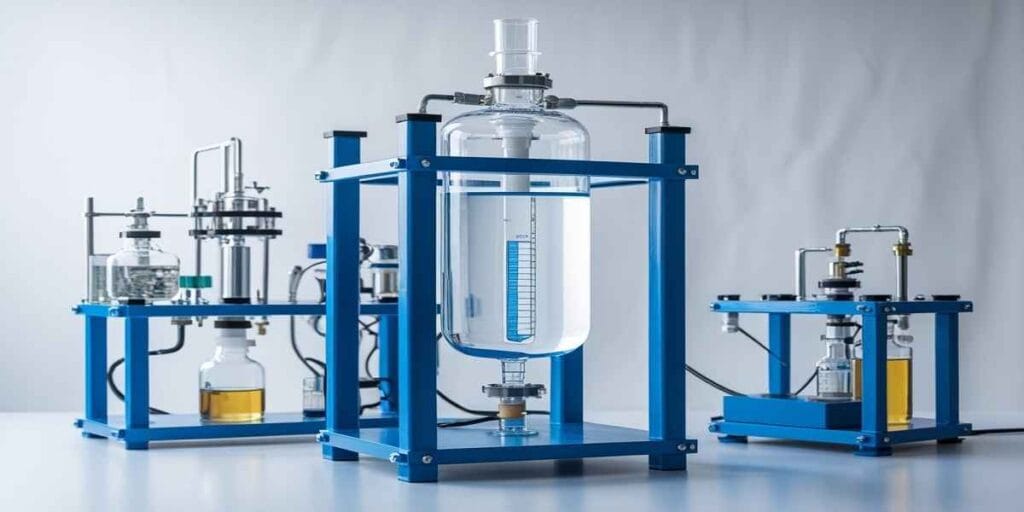
CSTR offers a full suite of advantages to businesses and industrial processes. These include:
1. Enhanced Mixing Efficiency
As we discussed earlier, these CSTRs feature a mechanical stirrer that continuously mixes the waste and bacteria throughout the digestion process.
Here’s what it does:
- Prevents solids from settling
- Ensures that microbes have uniform access to nutrients
- Improves the rate of biodegradation
Better mixing = Better Digestion = Efficient wastewater treatment process!
2. Higher Biogas production
During the waste digestion process in the reactor, the bacteria are evenly distributed throughout the waste material. Thus, it can provide more biogas, specifically methane, for renewable energy.
3. Improved Organic Waste Breakdown
There is a continuous inflow of waste into the reactor, which is constantly blended. This way, no layers are formed inside the tank.
In other words, the tough organic materials get broken down through four stages:
- Hydrolysis
- Acidogenesis
- Acetogenesis
- Methanogenesis
This way, you get a better output, the leftover sludge is reduced, and overall, an efficient waste treatment is achieved.
4. Scalability and Continuous Operation
Continuous Stirred Reactor Tanks are customizable, and based on the amount of your waste material, you can scale them up or down. Plus, you can operate them continuously without losing any efficiency!
So, when you don’t have to shut down the system frequently, you can use them for large-scale operations.
5. Controlled Retention Times
Another benefit of CSTRs is that they provide operators with the flexibility to adjust the Hydraulic Retention Time (HRT).
This way, you get:
- More control over the industrial wastewater treatment process
- Better performance from the CSTR
- Optimal utilization of space and resources
6. Low Maintenance
The CSTR’s simple design and continuous stirring feature make it superior to fixed-dome or plug-flow systems, which are prone to clogging and sedimentation issues.
This results in minimal downtime and fewer operational issues. Ultimately, this also means lower maintenance costs throughout the reactor’s lifecycle!
What is the Working Process of CSTR in Waste Digestion?
Now that you know about the basics of a continuous stirred tank reactor and its benefits, let me now discuss how the system actually works.
Hydrolysis
In this first step, large organic substances, such as proteins, fats, and carbohydrates, are broken down into soluble compounds. This is achieved through the continuous mixing and even distribution of the hydrolytic enzymes across the waste material.
The hydrolysis stage makes sure that there’s no formation of sludge in the reactor tank.
Acidogenesis
In this stage, the soluble substance gets converted into:
- Volatile fatty acids (VFAs)
- Alcohols
- Hydrogen
- Carbon dioxide
This is done with the help of acid-producing bacteria. Plus, the even blending helps them do their job without any interruptions.
Acetogenesis
The substances that were formed in the acidogenesis stage are further broken down in this stage into:
- Acetic acid
- Hydrogen
- Carbon dioxide
If the acetogenesis stage goes smoothly, it will prepare the material inside for producing methane in the next stage.
Methanogenesis
This is the final stage of a continuous stirred reaction, where the substances formed in the previous step are converted into methane and water.
Above, we discussed converting waste into a renewable energy resource.
This is the stage where it is actually done!
Here, the reactor maintains a constant:
- Temperature
- pH
- Mixing rate
Since methane-producing microbes grow slowly and are sensitive to fluctuations, this is the optimal operating setting for this stage.
Pro Tip: Check out this detailed guide on the continuous stirred tank reactor’s working principle and gain a clear understanding of the entire waste digestion process.
Industries That Can Benefit from CSTR-Based Waste Digestion
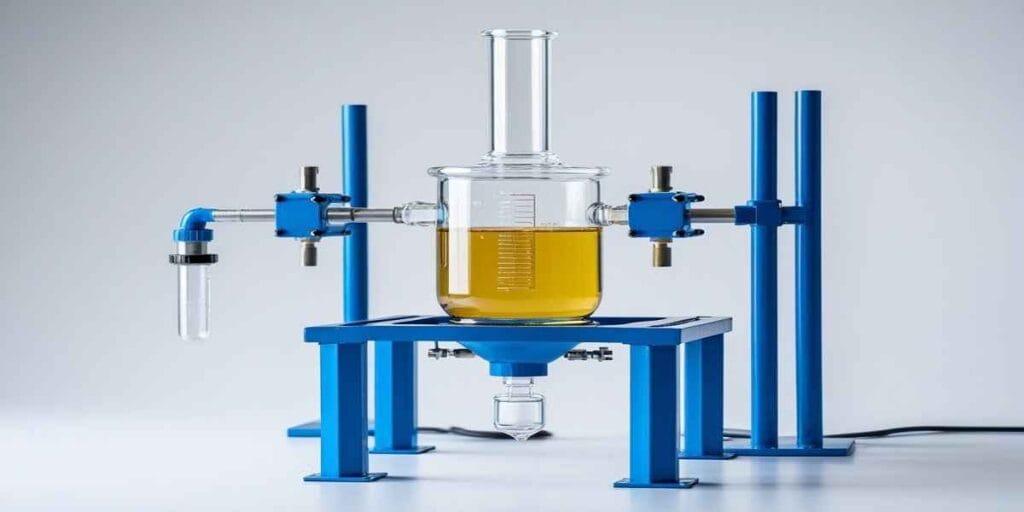
In many industries, continuous stirred tank reactor applications are important as they address specific needs.
Let’s have a look at some of those industries:
- Pharmaceutical Waste Treatment: These plants generate a substantial amount of organic waste, which poses a significant challenge to treat. Therefore, they are broken down by the reactor to ensure the overall wastewater treatment process remains safe.
- Agrochemical and Fertilizer Plants: In these plants, the reactor stabilizes wastes that have a high level of nitrogen and a risk of ammonia shock.
- Food and Beverage Industry: CSTRs increase the biogas production by rapidly digesting sugar, fat, and starch-rich waste.
- Municipal Wastewater Treatment Plants: Here, the reactor tanks are perfect for reducing sludge and treating huge volumes of organic waste.
- Biogas Production Plants: With the capability of continuously digesting waste, these plants consistently produce biogas.
- Pulp and Paper Industry: This industry generates tough fibrous materials that must be broken down. CSTR does exactly that and effectively.
Efficient Waste Digestion Starts with the Right Help
As we saw above, traditional waste digestion systems have some inefficiencies, and continuous stirred tank reactors are designed to address these issues.
If your business belongs to any of the industries we discussed — including operating a chemical processing plant — we highly recommend deploying a CSTR to reap benefits such as minimal waste, maximum efficiency, and optimal resource utilization.
However, with parameters such as retention time and reactor sizing, among others, you may need expert guidance to set up your continuous stirred tank reactor…
And that’s exactly where we come in!
We have been manufacturing CSTRs for decades and understand the unique waste characteristics and regulatory needs of every industry.
That’s why we build custom continuous stirred tank reactors that offer:
- Steady-state Operation
- High Quality
- Consistent Results
- Complete Control
- Scalability
Connect with our consultants today and get a custom CSTR solution to manage your industrial waste more efficiently than ever before!
Continuous Stirred Tank Reactor for Improving Waste Digestion Efficiency: FAQs
1. What is the purpose of a continuous stirred tank reactor?
The purpose of a continuous stirred tank reactor (CSTR) is to:
- Maintain a uniform mixture of reactants and microorganisms
- Ensures consistent biochemical reactions
- Generate biogas from waste digestion
2. What is a continuous stirred tank reactor wastewater treatment?
A continuous stirred tank reactor wastewater treatment is a process that:
- Breaks down organic matter through biological processes such as anaerobic digestion
- Keeps the wastewater and microbial biomass evenly mixed,
- Increases treatment efficiency
- Reduces sludge formation
- Produces a high amount of biogas
3. What are the applications of a CSTR reactor?
The applications of a CSTR reactor include:
- Food and beverage waste management
- Chemical manufacturing
- Wastewater treatment
- Biogas production
- Pharmaceutical waste treatment