
Did you know that the waste generated in your manufacturing process holds untold value?
What's on this page:
This value is held in the solvents that could have been recovered from the mixture and reused for future production processes.
A solvent recovery system helps you do just that, so you don’t have to make a new purchase every time.
What’s more, the industrial solvent recovery market is expected to reach a revenue of USD 2.3 billion by 2033!
Simply put, a solvent recovery system can help you recover revenue, reduce costs, and reuse waste to comply with environmental regulations!
In this blog, we’ll discuss everything about solvent recovery systems, starting with their types and components, how they work, and mainly the benefits and industry applications.
Let’s get started!
Solvent Recovery Systems: Table Of Contents
- What is a Solvent Recovery System?
- What are the Types Of Solvent Recovery Systems?
- What is the Working Principle of Solvent Recovery Systems?
- What are the benefits of using Solvent Recovery Systems?
- What Are The Key Industrial Applications Of Solvent Recovery Systems?
- Why Choose K-Jhil’s Solvent Recovery Systems?
- Solvent Recovery Systems: FAQs
What Is A Solvent Recovery System?
You can think of this as a recycling system for solvents.
Essentially, a Solvent recovery system or unit purifies and recycles all solvent waste generated from industrial processes.
The general process of doing this is through distillation and condensation.
Under this process, the waste mixture is heated to the boiling point, and later, the purified vapour is condensed to separate the solvent. That’s how solvent is recovered, and you can use it again in the same process.
You’ll find the utility of solvent recovery systems majorly in industries such as:
- Pharmaceuticals
- Chemical
- Paint
- Herbal Extraction
What Are The Types Of Solvent Recovery Systems?
All the Solvent recovery equipment or systems perform only one job, but their functionality has subtle differences. To understand that, let us explore the four categories of Solvent recovery systems.
1. Batch Solvent Recovery Systems
In batch solvent recovery systems, solvent mixtures are processed at a fixed quantity level. This type of system is suitable when multiple solvents or varying contamination levels are present.
2. Continuous Solvent Recovery Systems
This system is made for industries that require their systems to run 24*7. They can handle more solvent volume, and their recovery rates remain consistent. Industries like pharmaceuticals or petrochemicals use these systems the most, where production cannot be stopped much longer.
3. Vacuum Distillation Systems
If your processed solvent waste is heat-sensitive or has a high boiling point, vacuum systems are for you. It reduces the boiling point to preserve the solvent quality and safely recover the solvents without thermal degradation.
4. Multi-Stage Distillation Systems
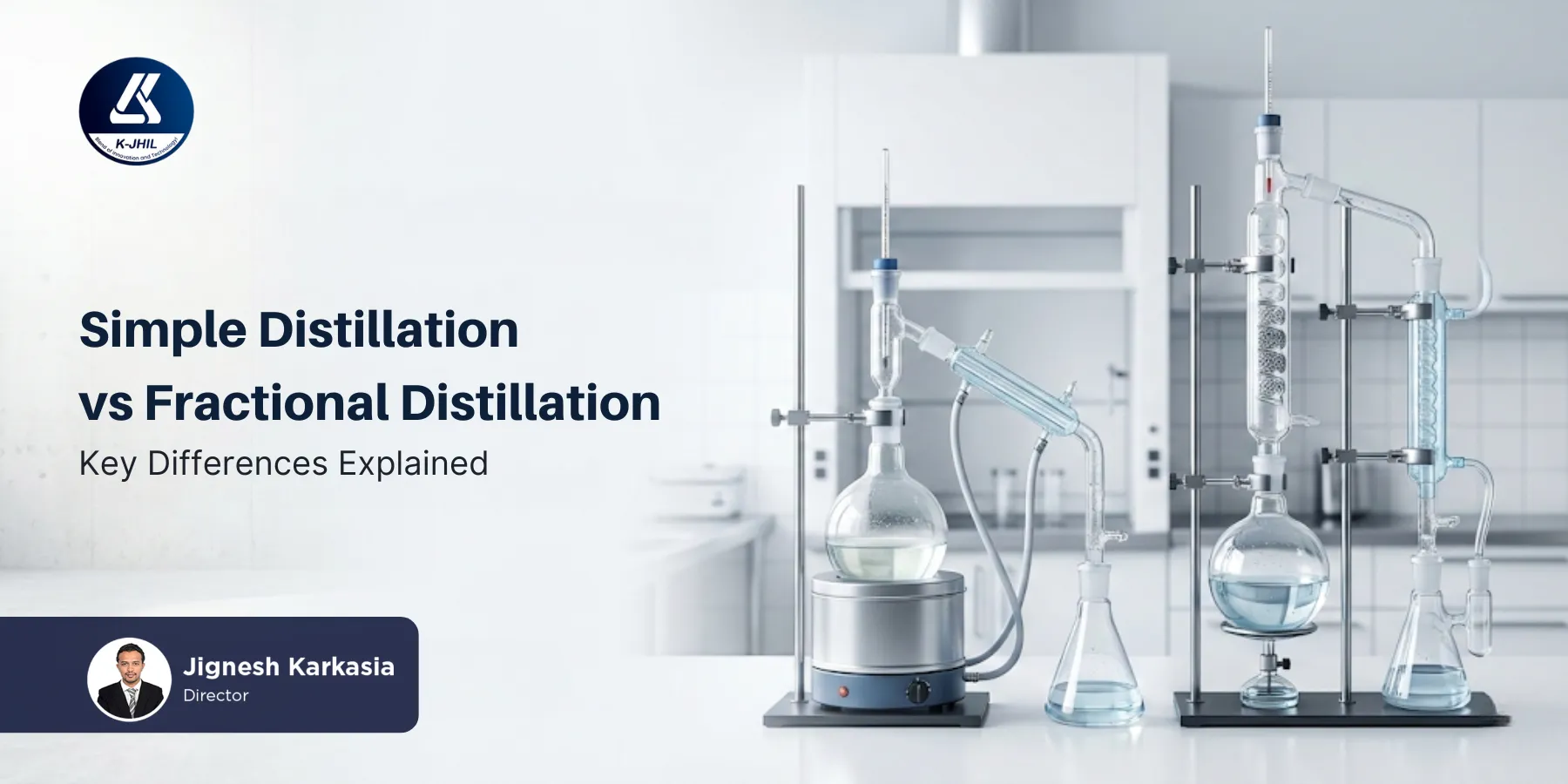
A multi-stage distillation system is used when the waste has multiple solvents. Basically, it used a process called fractional distillation to separate those solvents.
What Is The Working Principle Of Solvent Recovery Systems?
The working principle of a solvent recovery system is pretty simple. They are built around five core parts, and the entire solvent recovery process happens in five steps. Once you understand them, the whole system starts to make a lot more sense.
What Are The Key Components Of A Solvent Recovery System?
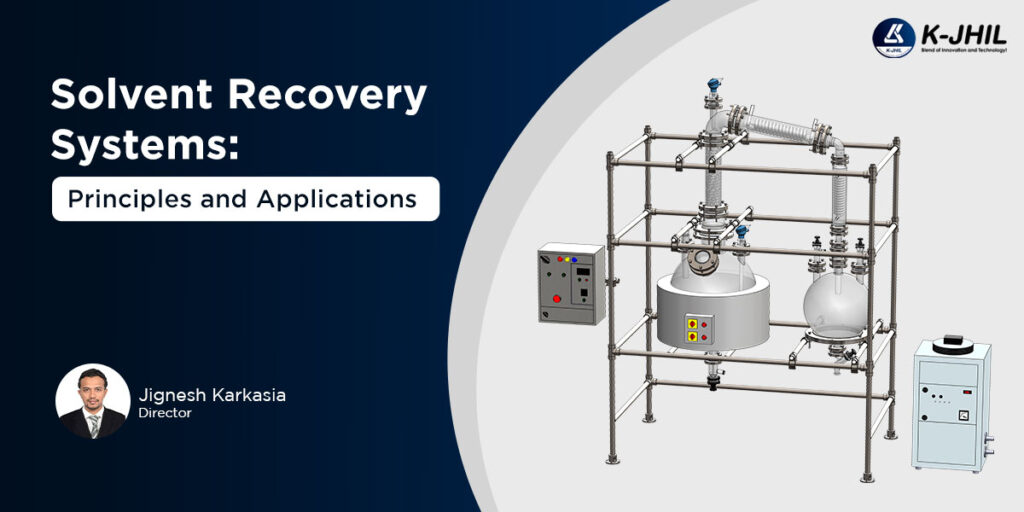
Solvent recovery equipment operates effectively when its components work together efficiently. So, let’s take a quick look at the core components of a solvent recovery system:
- Distillation chamber
- Condenser
- Receiver tank
- Heating elements
- Control panel
All these components work together in a few steps to reclaim the solvent, and now we’ll discuss those steps.
Step-by-Step Working Of A Solvent Recovery System
The entire process of solvent recovery isn’t that difficult and happens in just five steps, which are as follows:
Step 1: Collecting residual solvent waste or blends from the production line
Step 2: The mixture is poured into a distillation chamber to heat it
Step 3: The heated solvent evaporates and leaves all the unwanted material in the chamber
Step 4: The solvent vapor is passed through a condenser to separate the liquid solvent
Step 5: The recovered solvent is poured into a separate receiver tank for reuse
Once you begin reusing it, you will notice how these solvent recovery systems have helped your company.
What Are The Benefits Of Using Solvent Recovery Systems?
Like other businesses, if you run a manufacturing plant, we highly recommend that you install a solvent recovery system. It will help your business get the following benefits that others are getting.
- Cost Reduction: You will immediately save on solvent purchases, as you won’t have to purchase new solvents repeatedly
- Regulatory Compliance: Your plant’s waste output remains under control, which makes your business compliant with regulations such as the CPCB in India or the EPA in the U.S.
- Waste Minimization and Sustainability: Since all solvents are extracted from the waste mixture, the quantity of waste produced is reduced. Plus, it’s a great initiative that shows your company is committed to sustainability. In short, with industrial solvent recovery systems, you can ensure waste minimization and sustainability.
- Operational Efficiency: At the end of the day, you spend less on the purchase of solvents. This recycling leads to better operational efficiency, and it eventually leads to a stronger return on investment over time.
What Are The Key Industrial Applications Of Solvent Recovery Systems?
Normally, businesses try different methods to reduce operating costs and meet environmental standards. That’s why they use solvent recovery systems that help them do everything.
- Pharmaceutical industry: Pharma companies use expensive solvents such as methanol, ethanol, and acetone in their production processes. That’s why they install solvent recovery plants to recycle those solvents and spend less on buying new solvent stocks.
- Chemical Manufacturers: Chemical plants are concerned about safety because the solvents used in their manufacturing process are very dangerous. Therefore, manufacturers use these systems to clean and reuse those same solvents. This way, they protect the environment and their finances.
- Paint Industry: This sector uses it to recover solvents from spray booths. This helps reduce Volatile Organic Compound (VOC) emissions and aligns with air quality regulations.
- Oil and herbal extraction: Some solvents are used to extract oils from plants. Here, a solvent recovery system separates the solvent from the leftover biomass. Now, here, you need to be careful during the process of solvent selection for extraction. That’s because the right solvent will affect how efficiently the system recycles it.
- Printing and Packaging: In this case, alcohol-based solvents are recovered using the solvent recovery systems. Since their operations are on a large scale and the usage of solvents is quite high, it’s of great benefit to this sector
Why Choose K-Jhil’s Solvent Recovery Systems?
To sum up, solvent recovery systems regain the solvents and your business’s lost revenue.
We’ve worked closely with US-based companies in petrochemicals, pharmaceuticals, and specialty chemicals to help them recover solvents more safely and efficiently.
Some of them can be your competitors. So, get your setup as early as possible.
At K-Jhil Scientific, we build advanced solvent recovery systems designed to meet the complex requirements of advanced industrial processes.
Because modern solvent recovery techniques require modern solutions, we incorporate smart automation features, such as PLC and SCADA integration.
So, don’t wait! Connect with us today and reclaim your lost revenue!
Solvent Recovery Systems: FAQs
1. What is a solvent recovery system, and how does it work?
A solvent recovery system is a recycling machine used to recover solvents from industrial waste. Solvent extraction is done by first heating the waste mix, vaporizing it, and finally condensing the vapour to receive the solvent.
2. Which industries use solvent recovery systems the most?
Solvent recovery systems are most commonly used in industries such as:
- Pharmaceuticals
- Chemicals
- Paints
- Printing
- Herbal extraction
3. What are the benefits of installing a solvent recovery unit in manufacturing?
The solvent recovery system helps in:
- Reducing solvent procurement costs
- Minimize hazardous waste
- Support sustainability goals
- Ensure compliance with environmental regulations
4. How does solvent recovery contribute to environmental compliance in India and globally?
Solvent recovery systems help companies meet CPCB, EPA, and other global environmental standards by minimizing solvent waste and emissions.