
Do you work in an industry that uses chemical process systems? Then you might already be aware about glass lined reactor.
What's on this page:
These are corrosion-resistant reactors used in many labs and industry plants. They are known for providing reliable chemical results. But the main star of the show is not the reactor itself, but often the agitator that powers it.
Choosing the right glass-lined reactor agitator type is thus vital to ensuring consistent reactions. It ensures that every chemical reaction that happens in your reactor is safe and efficient.
It is also the agitator’s job to provide uniform mixtures and disperse gases and liquids.
In this guide, we will learn more about how agitators work and their main applications. Let’s begin!
What are the Main Applications of an Agitator?
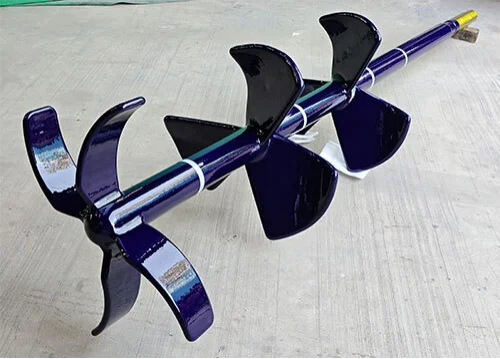
It is important to understand how an agitator can be used in an industrial setting. This will ensure you install the right type for your needs.
Here are common ways agitators are used within a jacketed glass reactor:
Application | Usage |
Homogenization | Making a uniform mixture of two or more liquids for easier dissolving |
Suspension | Keeping solid particles whirled up and floating in a liquid for easier dissolving |
Heat Transfer | Helping move heat into or out of the batch efficiently for efficient control |
Dispersion | Creating fine droplets of one liquid in another |
Main Flow Patterns of Agitators: Axial vs. Radial
Every agitator used in a reaction vessel creates a specific flow pattern. Understanding these patterns is key to selecting the right one.
The two primary types include:
- Axial Flow: Blades positioned to shift the fluid down or up the shaft. This prevents solids from settling at the bottom.
- Radial Flow: Blades that push the fluid horizontally towards the reactor walls. This is used to break apart clumps and disperse gases.
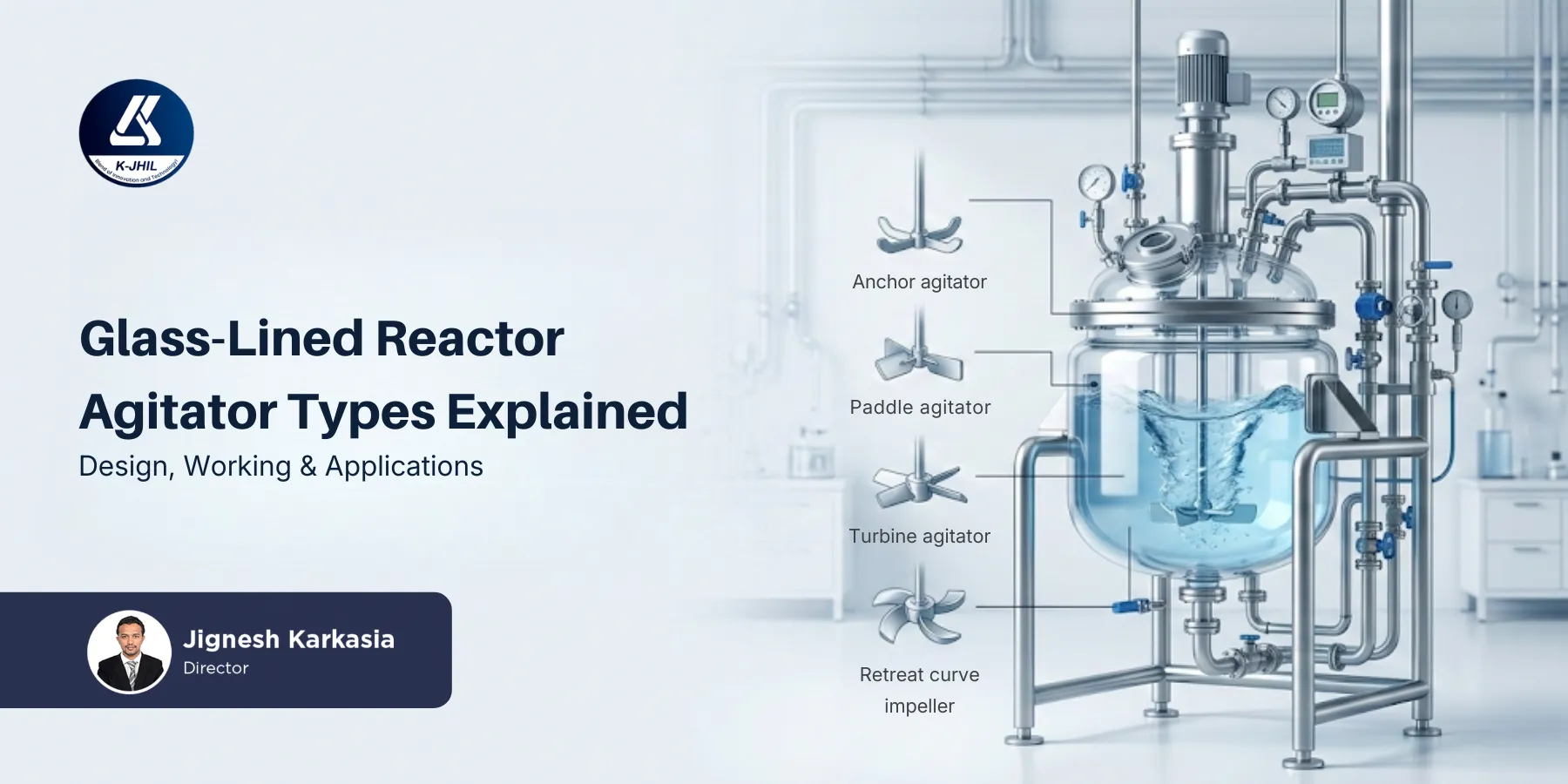
Major Glass-Lined Reactor Agitator Types
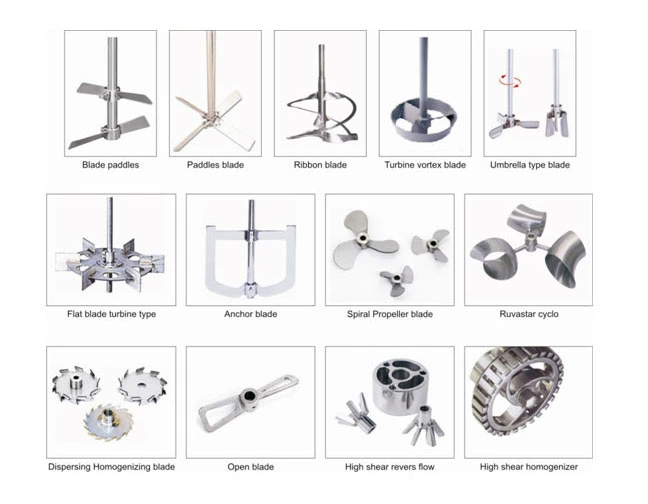
Below are the main types of agitators in glass-lined reactors and their uses:
Agitator Type | Primary Flow Pattern | Typical Applications | Best For |
Propeller | Strong Axial Flow | Blending low-viscosity liquids creates a solid suspension. | Used for simple mixing jobs. |
Pitched Blade Turbine (PBT) | Strong Axial Flow (when pitched) | Used for homogenization, suspension, and improving heat transfer. | Versatile industrial applications |
Flat Blade / Disc Turbine | Strong Radial Flow | Creating high shear for liquid-gas dispersion or liquid-liquid dispersion | Oxidation and Liquid-Liquid Dispersion |
Anchor | Tangential (scraping flow) | Laminar mixing of very high-viscosity materials | Prevent material buildup and improve heat transfer |
Modern and Specialized Agitator Designs
Alongside these basic types, manufacturers also use advanced agitator designs in their jacketed glass reactors. These include:
Hydrofoils & Turbofoils
These are extremely efficient propellers. They are specially designed to move large volumes of fluid with minimal power. They excel at creating an axial flow for blending and suspension.
Retreat Curve Impeller (RCI)
This is the most common agitator used for almost all glass-lined reactors. It protects the delicate polymer particles from being damaged during the reaction.
Conclusion: Making the Right Choice for Your Process
Choosing the right reactor is not enough. You also need to select the right propeller glass-lined reactor agitator types for maximum efficiency.
I recommend considering the following factors before buying an agitator:
- Ensure that you are clear about the process the agitator will be used for
- Check the properties of your materials to match them with the right agitator
- Understand if your reaction requires temperature control
- Check if the agitator is adaptable to future requirements
By understanding glass-lined reactor agitator types, you can improve the results of your industrial processes. Just make sure that you choose the right partner for your needs.
I recommend partnering with K-Jhil Scientific to select the right agitator for your needs. They are an industry leader that provides excellent support for global companies.
With their expertise, you can streamline your chemical manufacturing without any issues. Just make sure to ask the right questions and let them take over.
Contact K-Jhil Scientific today and discuss your precise industrial requirements!
FAQs
1. Why are there different glass-lined reactor agitator types?
Different glass-lined reactor agitator types are needed because chemical processes have different requirements. Some processes need strong top-to-bottom mixing to suspend solids, while others need high-shear action to break apart droplets. Choosing the right type ensures your mixing is efficient, safe, and effective for the specific reaction.
2. What is the most common agitator for a standard glass-lined reactor?
A Pitched Blade Turbine (PBT) is often considered a versatile workhorse for many glass-lined reactor types. It provides strong axial flow for good blending and solids suspension, making it a reliable, all-purpose choice for a wide range of applications in chemical process systems.
3. What agitator type is best for a high-viscosity material in a jacketed glass reactor?
For mixing very thick, high-viscosity materials (like polymers or pastes) in a jacketed glass reactor, an Anchor agitator is typically the best choice. It gently scrapes the vessel wall, prevents material buildup, and promotes heat transfer through the jacket, which is crucial for temperature control.
4. Can I use a propeller agitator in my glass-lined reactor?
Yes, you can. A propeller agitator is an excellent choice for creating strong axial flow in low to medium-viscosity liquids. It is particularly effective for simple blending and keeping light solids in suspension, making it one of the common propeller glass-lined reactor agitator types.
5. How do I decide between the different types of agitators in a glass-lined reactor?
Your decision should be based on your process goals. Ask: Do I need to blend, suspend solids, disperse a gas, or mix a viscous paste? Reviewing the flow patterns (axial for blending vs. radial for shear) and applications for each type of agitator in a glass-lined reactor will point you to the right design for your chemical process system.