
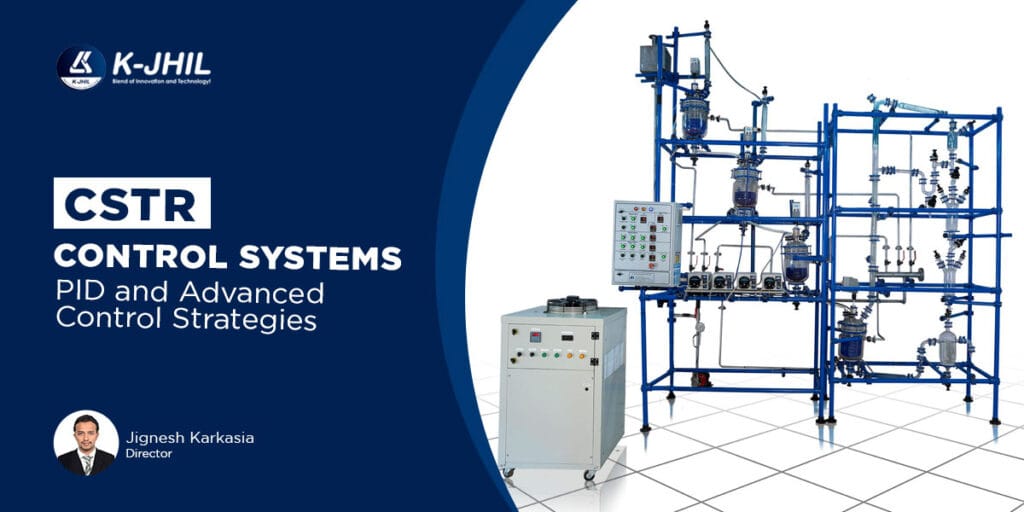
If you’re facing high downtimes due to quality control problems with your continuous stirred tank reactor systems, you’re not alone. We’ve heard a lot of clients complain about inefficiencies in their production cycles and high energy consumption – all because they don’t have the right CSTR control system in place.
What's on this page:
Over the last few years, we have also reviewed several scientific studies that have analyzed the impact of non-linear dynamics on CSTRs. What interested us most from these studies is that traditional tuning systems like the Ziegler-Nichols method are becoming increasingly ineffective.
You may be wondering which continuous stirred tank reactor control system you should be using to ensure the optimal functioning of your operations. That’s exactly what we’ll cover in this blog. We will discuss the importance of control systems, the best options currently available, and how you should choose the best ones for your operations.
Let’s get started!
CSTR Control Systems – Table of Contents
- What is a CSTR?
- Control Systems in CSTRs – Brief Overview
- PID – Optimal for Basic Control of Continuous Stirred Tank Reactor Systems
- Advanced Control Strategies for CSTR
- How to Choose the Right Control System for Your CSTR
- Final Thoughts on CSTR Control Systems
- CSTR Control Systems: FAQs
What is a CSTR?
A continuous stirred tank reactor is a high-tech blender for chemical reactions. Its job is to ensure that the chemicals you have chosen react in the right way at the right temperature and form the desired product or compound you’re looking for. Every CSTR has three components:
- A stirrer that ensures smooth mixing of the chemicals.
- A Cooling Jacket that keeps the compounds/mixtures cold.
- Inlet and Outlet Pipes that fill or drain the tanks.
But chemical reactions are often volatile and require extremely precise conditions. Even very small temperature changes can lead to reaction failure, incomplete reactions, or, most likely, inefficient reactions.
That’s where a control system comes in – it’s like the brain of your CSTR. Its job is to ensure that your reactions take place in the precise conditions that you want them to.
Thus, PID and Advanced Control strategies are very critical aspects of CSTR processes.
Why are Control Systems Important for CSTRs?

A modern CSTR is unthinkable without control systems. They are very important for three major reasons:
1. Enable Precise Reactions
In the absence of a Control System, chemical reactions in CSTRs can easily overheat or under-react. Both situations are undesirable and can lead to unexpected or undesirable outcomes. This might end up costing you both time and money, especially if you’re conducting reactions on an industrial scale.
2. Maintain a Safe Reactive Environment
If your CSTRs don’t use precision control systems, your chemical reactions could lead to toxic leaks or even explosions. Additionally, you might not pass safety inspections required by administrative regulations. Again, a CSTR with cooling jackets and the right control system can solve all these problems very easily.
3. Ensure Operational Efficiency
Lastly, your operations might suffer from severe inefficiencies if you don’t use high-quality control systems. Examples of this include wasted chemicals, increased energy consumption, and delayed delivery of expected end products.
PID – Optimal for Basic Control of Continuous Stirred Tank Reactors
A PID, or a Proportional Integral Derivative, is the most commonly used control system for CSTRs. In fact, 90% of industrial loops use PIDs as their main CSTR process control mechanism.
This is because they’re both simple and reliable. Let’s break down the term PID and understand why this is the case:
- Proportional: The control system adjusts the heat of your CSTR based on how far it is from the desired temperature at any given point in time.
- Integral: PID also fixes small errors quickly and consistency, for example, by adjusting the temperature every few minutes.
- Derivative: Lastly, PID CSTR temperature control also predicts errors based on the past ones and automatically adjusts the reaction metrics to prevent them from occurring in future reactions.
From what we’ve seen, properly tuned PID control systems can maintain CSTR temperature within ±0.5°C of the setpoint in 85% cases.
What makes PID control systems even more critical is that they can prevent cooling jacket failures, which account for 25% of temperature runaway incidents in exothermic CSTR reactions!
Advanced Control Strategies for CSTR
While PIDs might be the more popular controllers in the market, advanced strategies are the real game-changers in the world of CSTR control processes.
They’re making continuous stirred tank reactors better in three different ways:
1. Model Predictive Control
MPC helps you anticipate and prevent changes in errors in reactor tanks. It’s thus the most reliable CSTR temperature control strategy.
2. Fuzzy Logic Control
Second, it works a lot like human intuition, as soon as it senses that the reactor feels too hot for a given reaction, it automatically cools down. This means it can react to changes in real-time rather than at fixed periods.
3. Adaptive Control
Contemporary advanced control systems learn from the reactions you conduct over time. So, they become smarter and smarter at adjusting to repeated reactions that require the same conditions every single time.
Advanced CSTR Control Strategies: The Future of Control Systems
Advanced Control strategies can help you reduce energy consumption by up to 15%, and ensure that you’re not having to balance control measures against each other.
For example, a traditionally operated PID will automatically make changes to your tank at set time intervals. This means it might also have to take intervening actions if its initial action was unnecessary (i.e. your reaction was taking place under optimal conditions).
With advanced control strategies, you won’t face these problems and can rest assured that your CSTR is in optimal conditions at all times.
Plus, you have the option of applying the advanced strategies to your existing PID infrastructure. Two very good examples of this include PIDs backed by genetic algorithms and machine learning.
How to Choose the Right Control System for Your CSTR?
There are two very good alternatives you can choose from when it comes to CSTR control processes. The first is using either PID or an advanced control system. The second is integrating them. Let’s explore both approaches so you can choose the right one:
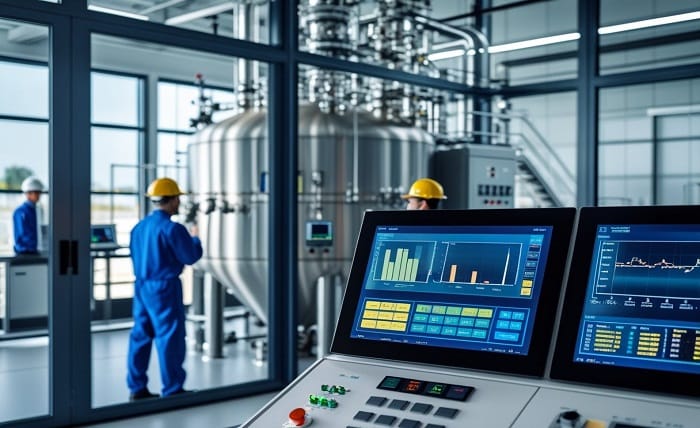
PID vs. Advanced Control Systems
If you want to choose between PID and advanced CSTR control processes, there are three factors you should consider:
1. CSTR Complexity
If you’re running very simple reactions that require steady feeds and predictable temperatures, PID should work fine.
However, for complex reactions that require variable inputs and non-linearity, advanced control systems with ML or MPC might be beneficial in the long run.
2. Safety and Compliance Requirements
If your CSTRs are producing compounds or chemicals for explosives or conducting reactions involving toxic chemicals, we suggest using advanced control strategies combined or failsafe PIDs.
3. Budget & ROI
When you’re working with tight budgets, PIDs might be your ideal options. They’re cost-effective and require very simple maintenance processes.
Advanced strategies will cost you more, but also save 10-15% in energy costs. Plus, they will also ensure that your reactions are neither incomplete nor inefficient!
PID + Advanced Control Systems
Next, let’s consider the second option – integrating PID and Advanced Control Systems into one operation. There are three use-cases that might require such an arrangement or make it the best overall option:
Use Case 1: Unpredictable Feedstock
When you’re facing challenges like inconsistent reactant quality (e.g., biofuel production), we recommend using the combination of Fuzzy Logic and PID.
It will dynamically adjust to eliminate “guesswork” conditions.
Use Case 2: Energy-Intensive Processes
If your CSTR temperature control system is working suboptimally, with cooling costs spiralling out of control in exothermic reactors, consider using MPC + PID.
It will preemptively optimize coolant flow, ensure that the temperature stays within the desired window, and lead to 10-15% energy savings on top!
Use Case 3: Rapid Scaling
Lastly, we’ve often heard clients complaining that sudden production surges end up overwhelming their PID control systems.
That’s where we suggest using ML-tuned PID CSTR control processes. They will learn and adapt in real time, with 20-25% faster response times to changes in CSTR conditions.
Lastly, GA-optimized PID improves disturbance rejection by 35%. This makes it ideal for reactors with frequent feed fluctuations.
Final Thoughts on CSTR Process Control Systems
As we’ve seen through this post, CSTR control processes are critical to ensuring that your chemical reactions are conducted under optimal conditions.
PIDs are the traditionally more popular control systems – they act like timers that periodically take measures to control your CSTR reactions. They’re also cheaper and require less maintenance.
Advanced Control Systems can ensure that your CSTR processes run on autopilot. While they’re more expensive up-front, they’ll help you reduce energy consumption and ensure optimal reaction conditions.
Remember, you don’t necessarily have to choose between the two – you can also combine both control systems if you’re working with sufficiently complex systems and operations.
At K-Jhil, our engineers specialize in helping enterprises integrate the right continuous reactor technology into their operations.
So, whether you need a customized PID or an advanced ML, MPC, or GA control system, reach out to our engineers, and we’ll help you acquire the ideal CSTR control system that aligns with your requirements!
CSTR Control Systems: FAQs
1. What is the most common control system for continuous stirred tank reactors?
Over 90% of industrial CSTRs use PID control for basic process stability. It’s reliable, cost-effective, and maintains temperature within ±0.5°C in most cases.
2. How does a CSTR with cooling jacket regulate temperature control?
The cooling jacket (like a fridge wrap) circulates coolant to absorb excess heat. PID controllers adjust coolant flow automatically, preventing 25% of temperature runaway incidents in exothermic reactions.
3. When should I upgrade from PID to advanced CSTR control strategies?
If your reactions have variable feeds, safety risks, or high energy costs, opt for MPC or ML-enhanced PID. These cut energy use by 10–15% and respond 20–25% faster to disturbances.
4. Can I combine PID with advanced control methods?
A: Absolutely! Hybrid systems (e.g., PID + Fuzzy Logic) adapt to unpredictable conditions. For example, GA-optimized PID improves disturbance rejection by 35% in reactors with fluctuating feeds.
5. Why is CSTR process control critical for safety?
Without precise control, reactions can overheat, leak toxic materials, or even explode. Proper CSTR temperature control (via PID or MPC) ensures stable, compliant, and efficient operations.